(And why your photos will all be from Yangshuo)
Here’s something few people know when planning a trip to Guilin: those iconic karst mountain photos you see in travel magazines—the ones that convinced you to come to this part of China in the first place—they’re not in Guilin. They’re in Yangshuo.
We know this because we’ve watched tousands of guests arrive at our hotel after spending a night in Guilin City, slightly confused about why their experience didn’t match their expectations. “It’s not as nice as we were told,” they say.
Let us save you that disappointment.
The Guilin Myth vs. The Yangshuo Reality
When you Google “Guilin,” you’ll see drone footage of endless limestone karsts rising out of morning mist, bamboo rafts gliding down emerald rivers, and rice paddies with water buffalo grazing against a backdrop of prehistoric-looking peaks. That’s the image that sells the trip.
Here’s what you’ll actually find in Guilin city: a third-tier Chinese city of 5 million people with traffic congestion, construction cranes, and air quality that ranges from “fair” to “stay inside.” Yes, there are some karst peaks visible from tall buildings on clear days. But you’re not surrounded by them. You’re surrounded by apartments, shopping malls, and the same fast food you could find in any Chinese city. Guilin became famous before Yangshuo, because it had an airport and fleet of boats when Yangshuo was just a poor rural backwater that was hard to access.
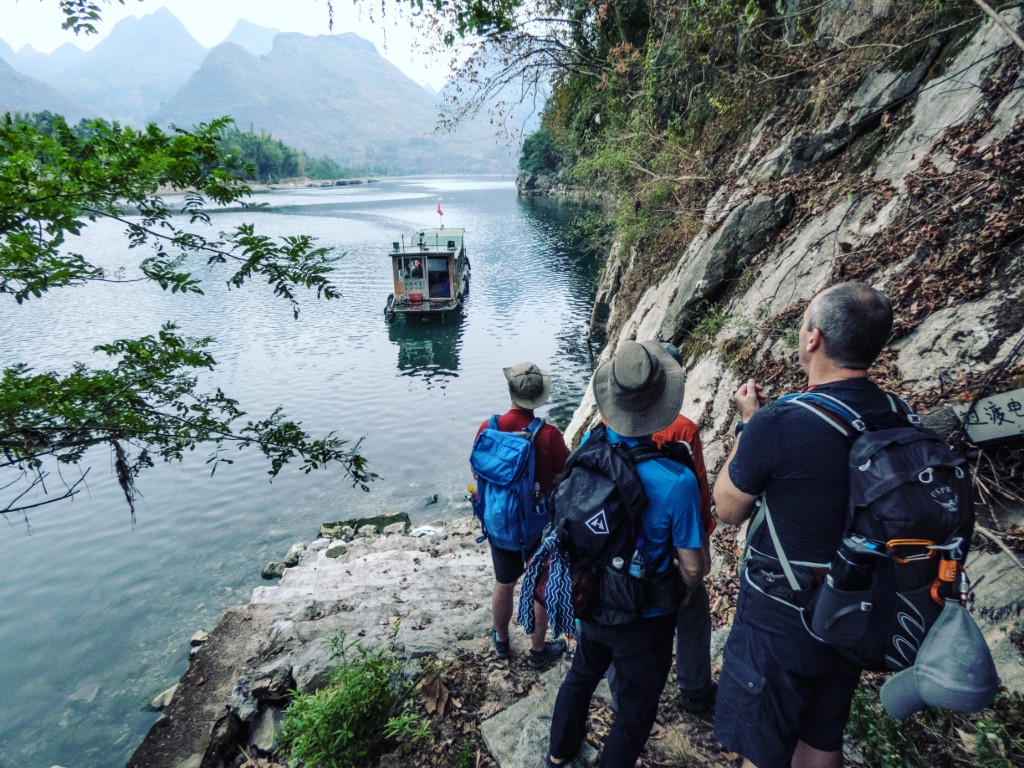
Yangshuo, on the other hand, is where those photos were taken. It’s where the karst landscape isn’t something you glimpse in the distance—it completely surrounds you. Rent a bike for 30 RMB and within five minutes you’re cycling past limestone pillars that look like they were designed by a committee of drunk gods, all while rice farmers wave at you from their paddies.
The countryside here isn’t a “scenic area” you pay admission to visit. It’s just Yangshuo the countryside. And it’s absurdly beautiful.
What Guilin Actually Has Going for It
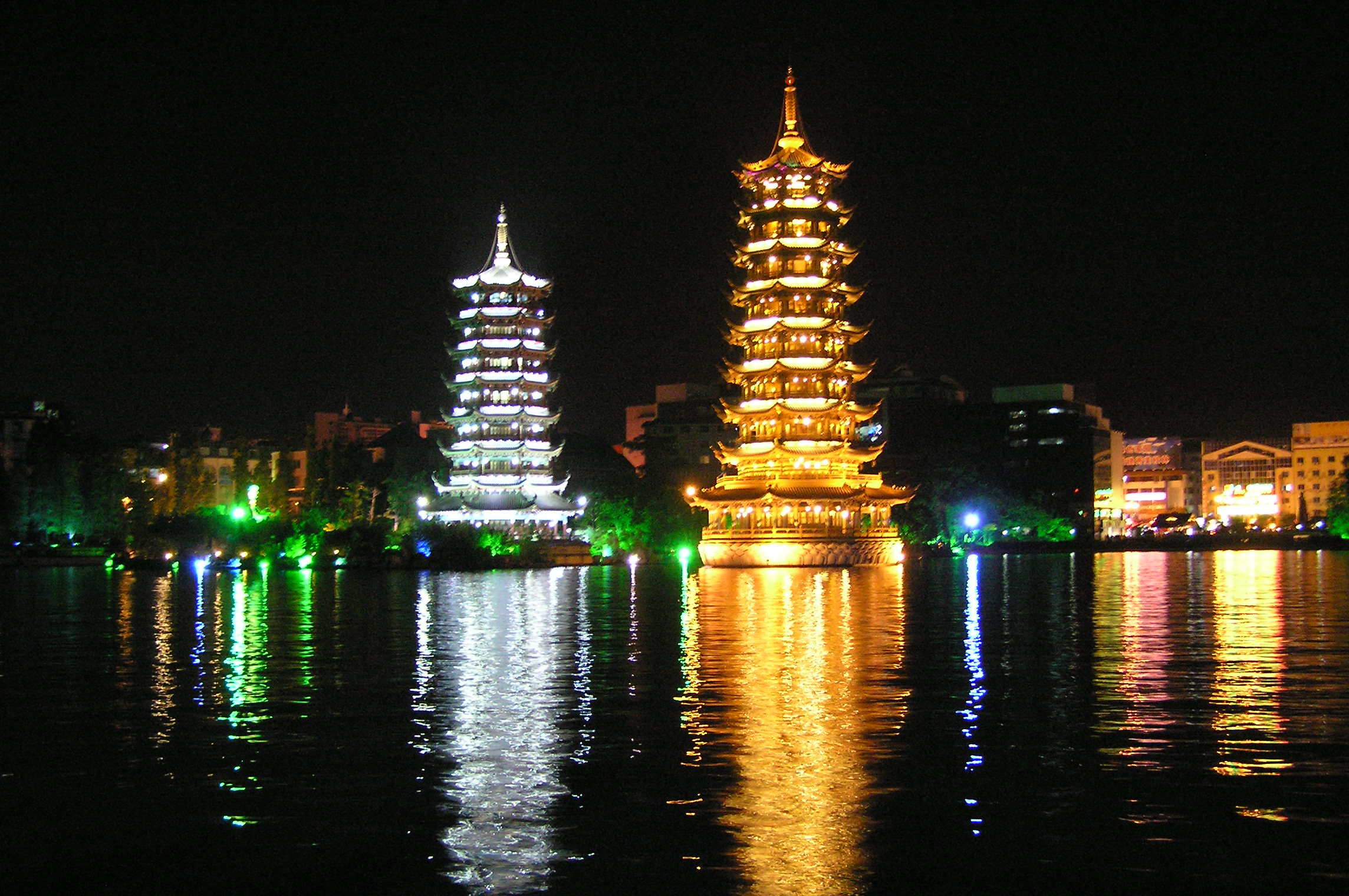
To be fair, Guilin isn’t terrible. The Sun and Moon Pagodas (see image above) are legitimately beautiful at night, all lit up and reflected in the lake. They’re also recent reconstructions (the originals were destroyed during the Cultural Revolution), but they photograph well and give you something to do for an evening.
There’s also the Reed Flute Cave, which is… fine. It’s a limestone cave with colored lights and groups of Chinese tour groups taking selfies. If you’ve never been in a cave before, you might enjoy it. If you’ve been in a cave before, this one is the Disney version of a cave: over-lit, over-touristed and over-shared.
Finally there’s Seven Star Park, with a lot of concrete, man-made landscaping and a large lake featuring Elephant Hill Scenic Spot. It’s an iconic elephant-shaped hill. It’s not that beautiful or interesting.
Guilin’s real value is as a transportation hub. It has an international airport (Liangjiang) with connections to Hong Kong, Seoul, and major Chinese cities. It’s also got the high-speed rail station if you’re coming from Guangzhou, Shenzhen, or elsewhere in China.
But here’s the thing: you don’t actually need to stay in Guilin to use its airport or train station.
The Direct Route to Where You Actually Want to Be
Most hotels in Yangshuo—including Yangshuo Mountain Retreat—offer direct airport pickup from Guilin Liangjiang Airport. It’s a little over an hour by car, and you skip the whole “night in Guilin because that’s what the package tour includes” routine.
If you’re taking the high-speed train, there’s actually a station called “Yangshuo Station” that’s much closer to Xingping than to Yangshuo town (yes, the naming is confusing). From Guangzhou, Shenzhen, or Hong Kong, you can be in Yangshuo in 2-3 hours without ever seeing Guilin city. Also, these points South offer faster access to Yangshuo, because they save you having to travel an extra 100 km North to Guilin and then come back South to Yangshuo.
The only reason to overnight in Guilin is if:
- You have an early morning flight out
- You’re genuinely interested in the Sun and Moon Pagodas
- Your tour package forces you to (if you can, our personal recommendation for a very local and high quality stay is Aroma Teahouse Hotel, perfectly located on Rongshan Hu (容山湖 – the pagoda lake) with a nearby walking street featuring local craft beer and other cheeful pubs and restaurants.
Otherwise, we recommend you skip it.
The Li River Cruise
This is where things get expensive and underwhelming.
The famous Li River cruise goes from Guilin to Yangshuo—a 4-hour boat ride that costs 200-350 RMB depending on which class of ticket you buy. Chinese tour groups love it because you sit in an air-conditioned boat, staff serve you tea, and you can see the karst scenery from the water.
It’s really not bad, but here’s why the boat ride is underwhelming:
You’re seeing the scenery from far away, on a noisy motorboat, unable to stop or explore. It’s scenic, sure. But you’re watching a landscape scroll by like a very slow, very expensive Windows screensaver.
The better option—and this is what independent travelers figure out once they arrive—is to skip the big boat cruise entirely and instead:
- Rent a bike in Yangshuo and cycle along the Yulong River. You’ll see the same karst peaks up close, you can stop whenever you want, and it costs 30 RMB for the whole day.
- Take a bamboo raft on the Yulong River. This is the authentic experience—an actual bamboo raft (not a tour boat), a local raftsman poling you down a quiet tributary, water buffalo wading nearby, no tour groups. It’s what the Li River cruise is trying to replicate but can’t because it’s too big, too busy and too commercial.
The Yulong River experience costs 100-150 RMB and takes 1-2 hours depending on which section you choose. You’re on the water, you’re moving slowly enough to actually see things, and you can bring your own beverages.
Read more: Best Things to Do in Yangshuo, Yulong River Bamboo Rafting
So What’s the Verdict? Is Guilin Worth It?
For 90% of travelers: No, not really.
Unless you have a specific reason to visit Guilin city (business meeting, visiting friends, you’re a die-hard pagoda enthusiast), you’re better off heading straight to Yangshuo and using that as your base.
Think about what you actually want from this trip:
- Cycling through rice paddies with karst peaks all around you? Yangshuo.
- Rock climbing on limestone cliffs? Yangshuo.
- Bamboo rafting down a quiet river? Yangshuo.
- Exploring ancient villages without tour buses? Yangshuo (and Xingping).
- Family-run restaurants run by people who care about food? Yangshuo.
Guilin gives you: a night in a city, a boat ride where you sit in rows, and bragging rights for having “done Guilin.”
Yangshuo gives you: the photos you thought you’d take in Guilin, plus the experiences you’ll actually remember.
The Smarter Itinerary
Instead of the traditional “Guilin → Li River Cruise → Yangshuo” package tour route, here’s what seasoned travelers do:
Day 0: Fly into Guilin Liangjiang Airport. Take direct transport to Yangshuo (75 minutes). Check into your hotel. If you’re staying at the Mountain Retreat, have dinner in our garden on the Yulong River, or if you’re staying in town, find a recommended restaurant somewhere on Hospital Road, (Shenshan Lu 深山路), orGuihua Lu (桂花路) not West Street.
Day 1: Rent a bike, cycle the Yulong River countryside route. Stop at Yulong Bridge (Ming Dynasty, actually old). Have lunch in a village where they’re genuinely surprised to see foreigners. Spend the afternoon rock climbing or get a massage because your legs are sore from hiking natural trails. Evening: avoid West Street’s noise pollution, find a quiet bar.
Day 2: Morning bamboo rafting on Yulong River. Afternoon: hire a driver to take you to Xingping, hike up to Laozhai Hill for sunset and the famous 20 RMB note view. If you’re feeling ambitious, wake up at 4:30am and go to Xianggong Hill for sunrise (it’s worth it, but you’ll need coffee).
Day 3: Take a day trip to Longji Rice Terraces if it’s May-October and you want to see minority villages. Or stay local and explore the countryside more—there are dozens of trails and villages you haven’t seen yet.
Day 4: Morning Tai Chi in the park with actual local retirees (not a “cultural show”). Light bike ride. Afternoon flight out from Guilin airport.
Total nights in Guilin city: Zero.
Total photos you’ll take that make your friends jealous: hundreds.
Final Thoughts: Trust Your Instincts
When you imagined this trip—what did you picture? Sitting on a tour boat with 200 other people, or being in the landscape you came to see?
Most people book Guilin because that’s what the travel websites tell them to do. Most people who’ve actually been here tell you to go straight to Yangshuo.
We’re giving you the benefit of 25 years hosting visitors here: Skip the city. Go to the countryside. Rent the bike. Take the bamboo raft. Wake up early for the sunrise. Find the restaurant where the menu isn’t in English.
That’s why you came to China, isn’t it?
Practical Info
Getting from Guilin Airport to Yangshuo:
- Taxi: 300-400 RMB (negotiate price before getting in)
- Hotel pickup: 250-350 RMB (book in advance)
- Didi (Chinese Uber): 250-300 RMB if you have the app and can read Chinese
- Time: 75 minutes
Getting from Guilin High-Speed Rail to Yangshuo:
- Direct bus from Guilin North Station: 20-30 RMB, 90 minutes
- Or take fast train to Yangshuo Station (actually in Xingping): 20 minutes, then taxi to Yangshuo town
Where to Stay in Yangshuo: Skip West Street unless you enjoy noise and crowds. Look for places along the Yulong River or in the countryside. Yangshuo Mountain Retreat is a riverside eco-lodge with views, fresh brewed Yunnan coffee, English speaking staff and great food.
Related Reading:
Frequently Asked Questions: Guilin vs Yangshuo
Is Guilin worth visiting or should I go straight to Yangshuo?
For 95% of travelers, skip Guilin city and go directly to Yangshuo. The iconic karst mountain scenery you’re imagining is in Yangshuo, not Guilin. Guilin is a mid-sized city with traffic and smog. The only reasons to stay in Guilin are: early morning flight departure, specific interest in the Sun and Moon Pagodas, or if your package tour forces you to. Most hotels in Yangshuo offer direct airport pickup from Guilin Liangjiang Airport (90 minutes), so you can skip the city entirely.
What’s the difference between Guilin and Yangshuo?
Guilin is a city of 5 million people with urban infrastructure, shopping malls, and limited karst scenery views. Yangshuo is a countryside town surrounded by dramatic limestone karsts where you can bike through rice paddies, take bamboo rafts on quiet rivers, and rock climb on karst cliffs. When you search “Guilin,” the photos you see are actually from Yangshuo. Guilin is 65km north and serves primarily as a transportation hub with an international airport and high-speed rail connections.
Is the Li River cruise from Guilin to Yangshuo worth it?
The 4-hour Li River cruise (200-350 RMB) is scenic but passive—you’re seated in rows on a large boat watching scenery scroll by. A better alternative is bamboo rafting on the Yulong River in Yangshuo (100-150 RMB, 1-2 hours). You’ll see similar karst landscapes up close, with a local raftsman on an actual bamboo raft, and you can stop, swim, or take photos freely. Combine this with cycling the Yulong River countryside for the authentic experience the big cruise tries to replicate.
How do I get from Guilin Airport directly to Yangshuo?
From Guilin Liangjiang International Airport to Yangshuo takes 90 minutes by car. Options include: hotel pickup service (250-350 RMB, book in advance), taxi (300-400 RMB, negotiate price first), or Didi/Chinese ride-share apps (250-300 RMB if you can navigate in Chinese). Many Yangshuo hotels offer direct airport transfers, eliminating the need to stay in Guilin city. The high-speed train “Yangshuo Station” is actually closer to Xingping and takes 20 minutes from Guilin, followed by a taxi to Yangshuo town.
What can you actually do in Guilin city?
Guilin city’s main attractions are the Sun and Moon Pagodas (beautiful at night, reflected in the lake) and Reed Flute Cave (limestone cave with colored lights). Both are worth a few hours if you have time. The city also has Elephant Trunk Hill, but it’s more of a photo opportunity than an experience. Guilin’s real value is as a transportation hub—it has an international airport with connections to Hong Kong, Bangkok, Seoul, and major Chinese cities, plus high-speed rail links. Most travelers use it as a transit point to reach Yangshuo rather than as a destination.
How many days should I spend in Yangshuo vs Guilin?
Recommended: 3-5 days in Yangshuo, 0-1 night in Guilin. A typical smart itinerary: Arrive at Guilin Airport, transfer directly to Yangshuo (90 min). Spend 3-4 days cycling countryside routes, bamboo rafting on Yulong River, rock climbing, visiting Xingping for sunrise at Xianggong Hill, and exploring local villages. On departure day, leave early for Guilin Airport. The only reason to overnight in Guilin is if you have an early morning flight. Most travelers who spend 2-3 nights in Guilin city wish they’d allocated that time to Yangshuo instead.
Can I visit Yangshuo from Hong Kong for a weekend?
Yes! With the new 240-hour visa-free transit policy (10 days), foreigners from 54 countries including US, UK, Australia, and most EU nations can visit Yangshuo from Hong Kong without a Chinese visa. Take the high-speed train from Hong Kong West Kowloon to Guilin/Yangshuo (2.5-3 hours) or fly to Guilin Liangjiang Airport (1 hour). A perfect weekend itinerary: Friday evening arrival, Saturday cycling and bamboo rafting, Sunday morning Xingping/Xianggong Hill, return Sunday evening. This makes Yangshuo an easy weekend escape from Hong Kong.
Where should I stay in Yangshuo to avoid tourist traps?
Avoid staying on West Street unless you enjoy loud music until 2am and inflated prices. Better options: countryside hotels along the Yulong River (peaceful, authentic views), like Yangshuo Mountain Retreat, boutique hotels in the old town’s quieter alleys, or heritage properties outside the main tourist zone. Look for places that offer bike rentals, have English-speaking staff, and can arrange transport to Xingping and other day trip destinations. Hotels 2-3km from West Street give you easy access to restaurants and activities while letting you sleep at night.