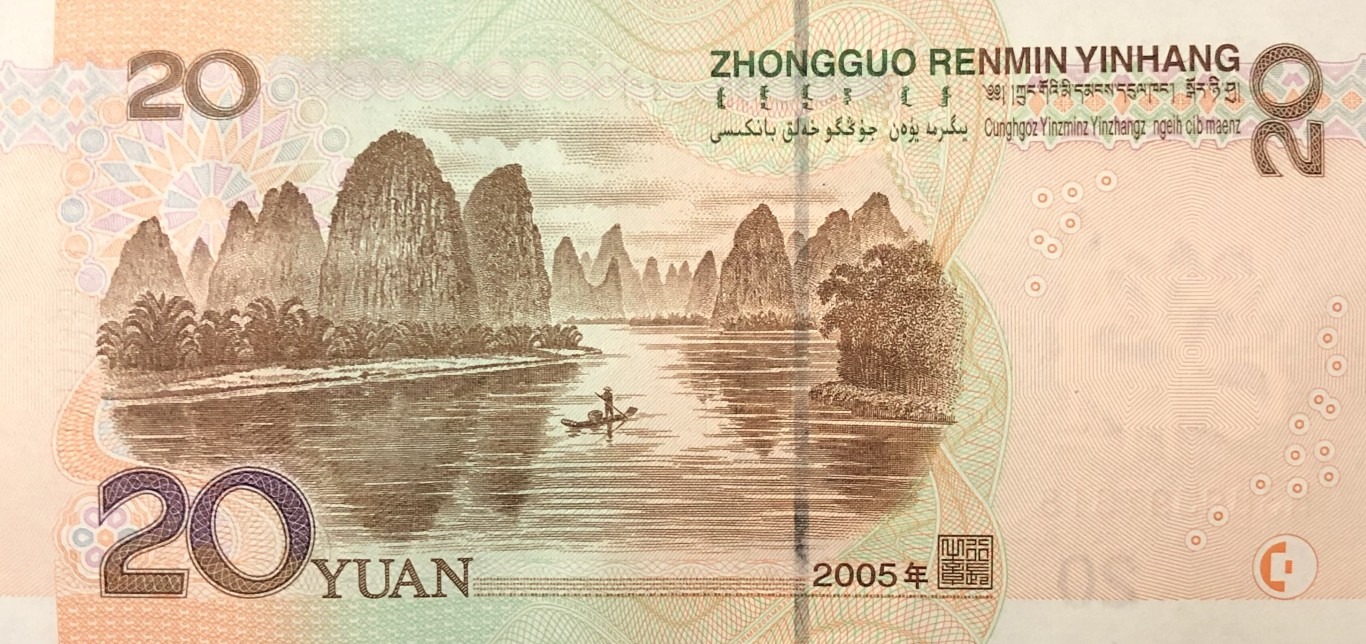
Everyone comes to Xingping for that 20 RMB banknote shot. The one with karst mountains reflected in the Li River, a lone fisherman on his bamboo raft. It’s the postcard image of China, literally printed on the currency.
Here’s what you might not realize: getting that photo takes about 10 minutes. Then what?
Xingping used to be Yangshuo’s quieter, less developed neighbor. The place you’d escape to when West Street got too loud and touristy. That changed fast. In 2025, Xingping has become exactly what it used to be an escape from—packed with tour groups, souvenir shops selling identical junk, and restaurants serving overpriced mediocre food to people who’ll never return.
But, (and this is important), get away from the ancient street, climb a mountain before sunrise, or walk 20 minutes in any direction, and Xingping still delivers something Yangshuo town can’t anymore: actual peace with real views. The scenery that made you want to visit Yangshuo in the first place.
This guide tells you what’s worth your time, what’s a tourist trap, and how to experience Xingping the way locals (and the few remaining expats) actually do.
That 20 RMB Shot
It’s overrated , considering how many equally stunning spots there are on the Li River and Yulong River.The scene depicted on China’s 20 yuan note shows Yellow Cloth Shoal (黄布倒影), a stretch of the Li River where karst peaks create perfect reflections. Finding the exact spot takes minimal effort—just follow the crowds from Xingping Ancient Town toward the pier. It’s a 15-20 minute walk.
Best time to shoot: Early morning (6-7 AM) or late afternoon (4-5 PM). Midday sun washes out the mountains and creates harsh shadows. Misty mornings in spring and autumn create that dreamy ink-wash painting effect you see in photos.
Sheeple shot: Most people stand on the road viewpoint, snap their photo holding up a 20 yuan note, and call it done. That viewpoint is…fine. Crowded, but fine.
For the actual banknote perspective, you need to get on the water. Either hire a small bamboo raft for 30 minutes (¥80-100 negotiable) or take the larger tourist rafts (¥216 per person for the Yangdi-Xingping route). The best angle appears about 5 minutes after leaving Xingping pier, heading upstream. We arrange these tours from Mountain Retreat all the time, just ask at reception.
Pro tip from a local photographer: The islet just offshore from the main pier offers a unique angle most tourists miss. You can wade out during low water, or hire a small raft to drop you there for 10 minutes (¥20-30).
What Happened to Xingping? (The 2025 Reality)
If you visited Xingping 5-10 years ago and loved its quiet charm, prepare for disappointment.
The ancient street (老街) has transformed into tourist central. Every other shop sells the same overpriced souvenirs, tacky “ethnic” clothing for photoshoots, and bamboo ice cream (which, is actually pretty good). The cafes and small bars that gave the place character? Mostly gone. Replaced by faceless restaurants serving tour groups.
The Street Food Guy (an expat who lived in Yangshuo for 5 years) visited in January 2025 and said it bluntly: “Xingping is no longer the next Yangshuo—it has become Yangshuo, but without any of the spice that made Yangshuo great.”
Here’s what’s still worth it: The scenery hasn’t changed. The Li River doesn’t care about commercialization. Laozhai Mountain still offers gorgeous sunrise views. And unlike Yangshuo, most tourists stick to the ancient street and pier area. Walk 15 minutes out, and you’ll have the place to yourself.
Skip the Ancient Street (Mostly)
Xingping Ancient Town has 1,700 years of history. You wouldn’t know it from the current main drag.
Instead you’ll find shops selling bamboo products, factory made silk scarves, tea, jade (probably fake), photo studios offering Hanfu rentals (traditional Chinese dress), yogurt sellers, and restaurants with bilingual menus showing pictures of every dish.
Does the ancient architecture exist? A bit of it. Qing dynasty buildings with gray brick 青砖 and tiled roofs line parts of the street. The opera stage from 1739 still stands. But you’ll view it all while dodging tour groups and pushy vendors.
What’s actually worth seeing:
Guandi Temple (关帝庙) – Built in 1739 during the Qianlong era. The opera stage has twin pillars with over 20 notches from centuries of performances. Four wood-carved panels above the stage show incredible detail. Free to enter, and tour groups mostly skip it.
The old alleys – Turn off the main tourist street into the smaller lanes. You’ll find actual residents, family workshops making bamboo fishing tools (techniques unchanged for generations), and the occasional grandmother sitting outside sorting vegetables. No crowds. No trinket shops.
Morning market – If you’re staying overnight, the local market near the pier (operating 6-9 AM) sells fresh produce, live fish, and street food actually meant for locals, not tourists. Prices drop to normal Chinese levels the second you step out of tourist-street range.
In short, walk through the ancient street once for context, snap a few photos, then move on. The real joy of Xingping is elsewhere.
Where to Actually Go: The Mountains
Xingping’s magic isn’t in the town—it’s above it. Three mountains offer completely different perspectives on the Li River and karst landscape. Each has different crowds, difficulty, and best times to visit.
Laozhai Mountain (老寨山): The Sunrise King
This is THE sunrise spot near Xingping. A steep 30-minute climb (roughly 200 stone steps through bamboo groves) leads to viewpoints that photographers obsess over. The Li River curves dramatically between karst peaks, rice terraces glow green below, and riverside villages look like miniature paintings.
The steps are well-maintained but relentless. If you’re reasonably fit and take breaks, you’ll make it. I’ve seen people from 10 to 70 successfully climb it.
Go at sunrise (arrive by 5:30 AM in summer, 6:00 AM in winter). The summit gets crowded fast. By 7 AM, every photographer with a tripod has claimed their spot. Go for sunset if you want fewer people, though the light isn’t quite as magical.
Halfway up, you’ll find the Peace Pavilion and Friendship Pavilion, both built in the 1990s by a Japanese traveler who fell in love with the area and stayed to help repair the mountain paths. At the summit, you can see exactly why this view appears in every “real China” photography collection.
But be advised, It’s popular now. Really popular. During Chinese holidays (October Golden Week, Spring Festival), forget it—you’ll be shoulder-to-shoulder with selfie-stick wielders. Weekdays outside peak season? You might share the summit with 5-10 people. Magical.
Xianggong Hill (相公山): The Photographer’s Choice
Located across the Li River from Xingping (28km from Yangshuo), Xianggong offers the most dramatic Li River bend viewpoint. This is where professional photographers set up camp for sunrise shots that win awards.
How to go: You can’t easily get here from Xingping without your own transport. Options include:
- Hire a driver from Yangshuo (¥150-200 round trip)
- Rent an electric scooter and ride yourself (~45 minutes from Yangshuo)
- Stay at the hotel right next to the trailhead (if you’re serious about sunrise)
The climb is 20 minutes up well-maintained steps. Not difficult, but arrive by 5 AM if you want prime tripod position. The viewpoint fills by 5:30 AM.
The sunrise here transforms the Li River into liquid gold. Mist rises from the water, peaks emerge from shadow, and if you time it right (spring and autumn mornings), the scene looks like a classical Chinese painting come to life. This is the view you came to China for.
It’s a schlep. Unless you’re staying nearby or hiring transport, Xianggong is logistically annoying to reach for sunrise. Worth it? If photography is your thing, absolutely. If you just want nice views, Laozhai is easier and nearly as spectacular.
Houshan Mountain (后山): The Local Secret
“Back Mountain” sits literally behind Xingping Ancient Town, about 2km away. Almost nobody goes here. It’s undeveloped, the trail is natural stone paths (can be slippery after rain), but the 20-minute hike leads to a viewing platform that shows both the ancient town AND the 20 yuan landscape.
This is for people who want to escape crowds entirely. Local guides take small groups here because they know tour buses don’t bother.
Avoid rainy season (April-June). The trail gets genuinely slippery, and fog often obscures the views. Sunny days from September-November are ideal.
How to find it: Ask your guesthouse, or hire a local guide (¥100-200 for a half-day). It’s not signposted in English, and you’ll likely get lost trying to find it on your own unless you speak Chinese and are willing to ask a few times as you go.
The Bamboo Rafting Question
Should you do it? Depends. Bamboo rafting on the Li River near Xingping comes in two flavors: the official expensive route and the negotiated local option.
Official Yangdi-Xingping Route:
- Price: ¥216 per person (2025 rates), plus ¥35 for each empty seat (rafts seat 4)
- Duration: 1.5-2 hours drifting downstream from Yangdi to Xingping
- What you see: Nine Horses Fresco Hill, Yellow Cloth Shoal, multiple stunning karst formations
- The catch: If you’re solo or a couple, you’ll pay extra for empty seats, making it expensive (¥486 for two people if no others join)
This is beautiful. Legitimately one of the prettier sections of the Li River. But it’s also become very controlled and touristy. Official ticket office, set departure times, dozens of identical rafts floating in a line. Still worth it if you want the experience, just don’t expect rustic authenticity.
Local Shorter Routes:
- Price: ¥80-120 per raft (negotiable, seats 2-4 people)
- Duration: 30 minutes to 1 hour, short loops from Xingping pier
- What you get: The 20 RMB photo from the water, some karst views, cormorant fishing (for a fee)
Our take: If you’re already doing the Guilin-Yangshuo cruise, skip the bamboo raft—you’ve seen the river. If you haven’t done any Li River trip, the Yangdi-Xingping route is genuinely spectacular. Just expensive. The short local rafts are fine for the 20 RMB photo but not much else.
Cormorant fishing photo-op: You’ll see rafts with fishermen and cormorant birds. They’ll charge ¥20-50 to pose for photos. It’s completely staged (the birds are trained, not actually fishing), but if you want the traditional Chinese fishing shot, this is your chance. Up to you if it feels authentic enough.
Where to Eat (Without Getting Ripped Off)
Ancient street restaurants? Overpriced mediocrity aimed at tour groups who’ll never return. That German beer place? Equally overpriced, minus the charm.
Beer fish—Xingping’s supposed specialty—costs ¥80-150 on the tourist street for versions that locals describe as bland and uninspired.
So where do you eat? Head toward the residential areas behind the main tourist zone. Look for restaurants filled with Chinese families, not tour groups. Menus will be in Chinese only, prices drop to ¥30-50 per person, and the food actually tastes like someone cares.
Insider tip: The morning market (6-9 AM) has street breakfast vendors selling buns, noodles, and dumplings for ¥5-15. This is what locals eat before the tour buses arrive.
Old Street Bar – Decent reviews on Dianping (Chinese Yelp) in 2024. More expensive than true local places, but better quality than tourist traps.
For snacks: Bamboo ice cream (served in freshly cut bamboo tubes) is actually pretty good and not crazy expensive (¥10-15). The bamboo adds a subtle earthy flavor and keeps it cold longer. Try it.
The takeaway: Xingping’s food scene isn’t why you’re here. Eat enough to stay functional, focus on the scenery.
Should You Stay Overnight?
Depends on your itinerary and how much you care about sunrise.
Reasons to stay:
- Sunrise on Laozhai or Xianggong – The climbs start dark (4:30-5:30 AM). Staying overnight means you’re already here.
- The ancient town after dark – Once day-trippers leave (around 6 PM), Xingping gets genuinely quiet. You can walk the alleys without crowds.
- Sunset on the Li River – The light at 5-7 PM turns the karst peaks golden-orange. Stunning from the pier area.
Reasons not to stay:
- Limited nightlife – This isn’t Yangshuo. There’s basically no bar scene anymore. There’s one KTV. Quiet is the point.
- Easy day trip from Yangshuo – Buses run frequently (¥20, 45-60 minutes). Didi taxis cost ¥60-80 for the direct trip.
Accommodation options: Mostly small guesthouses and family-run places. Many have balconies with river or mountain views. Expect ¥150-400 per night depending on season and view quality. Nothing fancy, but clean and comfortable enough.
Mountain Retreat perspective: We’re based on the Yulong River outside Yangshuo. Most of our guests who visit Xingping do it as a half-day trip—catch the morning bus, see the 20 RMB spot, maybe climb Laozhai for sunset, bus back by evening. Works perfectly fine. Only stay overnight if you’re chasing that golden-hour photography.
How to Get There
From Yangshuo:
- Bus: Depart from Yangshuo bus station, ¥20, runs every 30-60 minutes, 45-60 minute journey. Gets you close to the ancient town.
- Didi (Chinese Uber): ¥60-80, 35-45 minutes, drops you exactly where you want. No schedule constraints.
From Guilin:
- Bus: Qintan Bus Station to Yangshuo, transfer to Xingping bus. About 2-2.5 hours total.
- Hire a car: ¥200-300, saves time if you’re in a group.
- Li River cruise: Some cruises from Guilin pass Xingping but don’t stop. Check your specific cruise route.
High-speed rail: Yangshuo’s high-speed train station is technically in Xingping (15-20 minutes north of town). If you’re arriving by train from elsewhere in China, you’re already close to Xingping. Just grab a local bus or taxi into town.
What to Skip Entirely
The fishing village photo studios – Multiple shops offer traditional Chinese dress (Hanfu) rentals plus professional photos. Costs ¥200-500 depending on outfit quality and number of photos. Look, if this is your thing, go for it. But it’s completely touristy, and every third person on the ancient street is wearing the same outfits. So 2023.
Overpriced tea houses – Same tea house scam we warned about in the Yangshuo scams guide. Friendly stranger, “authentic” tea ceremony, ¥300-800 bill. Just don’t.
The fish massage places – Tiny fish nibble dead skin off your feet while you sit in a shallow pool. Sanitary? Yikes. Worth it? Nope. Some of these fish carry a virus with your name on it. ¥30-50, better spent elsewhere.
Tour operators on the ancient street – They’re booking the exact same bamboo rafts and mountain hikes you can arrange yourself, but adding 30-50% markup. Buy raft tickets at the actual pier. Climb mountains on your own (they’re well-marked).
The Honest Assessment
Is Xingping worth visiting in 2026? If you’re already in Yangshuo: Yes, as a half-day or day trip. The 20 RMB view, Laozhai Mountain, and the contrast between tourist chaos and empty countryside make it worthwhile.
If you’re choosing between Yangshuo and Xingping for your base: Stay in Yangshuo (or better yet, somewhere quieter like Yangshuo Mountain Retreat). Xingping works better as a destination than a home base.
If you’re expecting the quiet, undiscovered ancient town old guidebooks described: That’s gone. Xingping followed Yangshuo’s trajectory—just compressed into 3-5 years instead of 20.
But here’s the thing. Get up early. Climb Laozhai before the crowds. Or walk 20 minutes outside town toward the rice fields. Xingping’s scenery hasn’t changed, and that scenery is legitimately spectacular. Some of the best in China.
The question is whether you’re willing to wake up at 5 AM and walk away from the tourist zones to find it.
There is a lot to do in the area if you love nature there is a good footpath along the river for a relaxing walk along the river you can also cross the river with a ferry and explore the more rural areas. There are some nice hiking routes to waterfall but need a local guide to get there most of the hotels will be able to arrange one for you the same goes for caving the caves are not set up for mass tourism, still natural and beautiful and thus you will need a guide
who will supply you with safety gear and transport to get there. You can normally choose a 2 hour to full day tour. The most common activity is to take a trip up and down the Li River on a bamboo raft or take a river cruise to Guilin. there are a few hiking trails you can take to hike up to the top of the mountain peaks in the area with the most spectacular views of the village river and karst peaks.
For the less active people there is a village not too far away that you can drive up or take a small tourist car it has a coffee shop at the top of the mountain where a lot of people love to go and see the sunrise over the mountains. My favorite activities are the white river rafting, not to wild but still exciting and hiking up a small river in the mountains, mostly shallow water but there are some river pools that you can swim. You can get water shoes and life jackets at the base camp if you need. There are also places
for offroad 4-wheel ATV trips and canoeing in the area.–Lourens Annandale, six-year Xingping resident and chef at Nostalgia Pizzeria
Frequently Asked Questions
Is the Xingping 20 RMB viewpoint worth it?
Yes, but manage expectations. The roadside viewpoint where most people stop is nice—karst peaks, Li River, photo op. Worth the trip from Yangshuo. However, the truly spectacular angle requires getting on the water via bamboo raft. Early morning or late afternoon light makes a huge difference. Go at golden hour (first or last hour of sunlight) to avoid harsh midday shadows and see the mountains glow.
How long should I spend in Xingping?
Most people do half a day: arrive mid-morning, walk the ancient street, get the 20 RMB photo, maybe take a short bamboo raft, then head back to Yangshuo. If you want to climb Laozhai Mountain for sunrise or sunset, add 3-4 hours. Only stay overnight if you’re serious about photography or want to experience the town after day-trippers leave around 6 PM.
Is Xingping better than Yangshuo?
Different, not better. Yangshuo has more restaurants, bars, activities, and accommodation options. Xingping is smaller, quieter after dark, and has the famous 20 RMB view. Yangshuo makes a better home base. Xingping makes a better day trip. Think of Xingping as a specific photo destination, Yangshuo as a full town.
Can I climb Laozhai Mountain in Xingping?
Absolutely, and you should. It’s a 30-minute climb (200 stone steps) that’s moderately challenging but doable for most fitness levels. The summit offers incredible views of the Li River bend and karst mountains. Best at sunrise (arrive by 5:30-6 AM) when mist rises from the river and light is magical. Weekdays are less crowded than weekends. Bring water and wear decent shoes—the steps can be slippery after rain.
How much does a bamboo raft cost in Xingping?
Two options: The official Yangdi-Xingping route costs ¥216 per person plus ¥35 for each empty seat on the 4-person raft (total ¥486 for 2 people if alone). This 1.5-hour trip is beautiful but expensive. Local shorter rafts from Xingping pier cost ¥80-120 per raft (negotiable) for 30-60 minute trips, enough to get the 20 RMB photo from the water but not the full scenic route.
Where should I eat in Xingping Ancient Town?
Avoid the ancient street restaurants—they’re overpriced tourist traps. Walk toward the residential areas behind the main tourist zone and look for places filled with local Chinese families. No English menus, prices around ¥30-50 per person, much better quality. The morning market (6-9 AM) has breakfast vendors selling noodles, buns, and dumplings for ¥5-15. For snacks, the bamboo ice cream is actually decent at ¥10-15.
Is Xingping Ancient Town free to enter?
Yes, walking through Xingping Ancient Town is completely free. There are no entrance fees. However, specific activities cost money: bamboo rafting (¥216 for official routes, ¥80-120 for short local trips), climbing Xianggong Hill (¥60), and optional photo-ops like cormorant fishing (¥20-50). The main viewpoint for the 20 RMB scene is free to access from the roadside.
How do I get from Yangshuo to Xingping?
Bus is cheapest: ¥20 from Yangshuo bus station, departs every 30-60 minutes, 45-60 minute journey. Didi taxi costs ¥60-80 and takes 35-45 minutes with no schedule constraints. If arriving by high-speed train from other Chinese cities, Yangshuo Station is technically in Xingping—take a local bus or taxi (15-20 minutes) into Xingping Ancient Town.
When is the best time to visit Xingping?
September to November offers cool temperatures, dry conditions, and the best light for photography. Spring (March-May) is also beautiful with blooming flowers, though occasional rain. Avoid April-June rainy season if planning mountain hikes (trails get slippery). Summer (June-August) is hot and humid but manageable with early morning visits. Weekdays are always less crowded than weekends. Chinese national holidays (October Golden Week) are a nightmare—avoid.
Is Xingping touristy now?
Very. What was once a quiet escape from Yangshuo has become heavily commercialized with tour groups, souvenir shops, and overpriced restaurants. The ancient street feels like any other Chinese tourist town. However, the natural scenery hasn’t changed. Wake up early, climb the mountains, or walk 15-20 minutes outside the main area, and you’ll still find beautiful, peaceful spots. The crowds concentrate in predictable zones—avoid those.
Planning your Yangshuo trip? Stay at Yangshuo Mountain Retreat on the peaceful Yulong River. We’ll help you arrange your Xingping day trip without the tourist trap pricing, and you’ll actually get some sleep before that 5 AM Laozhai sunrise climb. Book direct for the best rates.