Category: Travel to Yangshuo

  • Yangshuo’s Last Family-run Homestays

    Yangshuo’s Last Family-run Homestays

    I grew up in Yangshuo, watching this small market town transform from a quiet riverside community where everyone knew each other into one of China’s biggest domestic tourism destinations. My grandmother used to sell oranges at the West Street market. Now that same corner has a Starbucks. And a Dairy Queen.

    I’m not saying that’s bad—Yangshuo needed economic development, and tourism brought prosperity to families who were subsistence rice farmers twenty years ago. But something got lost in the transformation, and if you’ve been visiting Yangshuo for any length of time, you’ve felt it too.

    When I started working as a guide at Yangshuo Mountain Retreat in 2015, there were still dozens of small, family-run guesthouses where you’d meet the owner’s grandmother at breakfast, where staff would remember your name when you came back the next year, where the cook would ask if you liked spicy food and adjust the chili level just for you. Almost all of those places are gone now.

    Not because they failed, but the families running them got tired, got older, or got better offers. It’s easier to rent your building to an outsider and collect monthly income, than to work sixteen-hour days learning English, managing bookings, and fixing broken toilets in the middle of the night.

    I don’t blame them. Running a guesthouse is exhausting. But I miss what those places offered: the feeling that someone actually cared whether you enjoyed Yangshuo, not because it was their job, but because you were staying in their home.

    There are four places left in Yangshuo that still operate that way. They’re all different—different locations, personalities, and styles, but they share something increasingly rare: they’re run by people who are personally invested in your experience because this is their life’s work, their family business, their reputation.

    If you want to understand what Yangshuo homestays used to feel like, before “boutique minsu” became a marketing term that every hotel uses—these four are definitely worth a stay. Not because everything else is bad, but because these four are different in ways that matter.


    What Makes a Homestay Feel Different?

    I’ve led hundreds of tour groups through Yangshuo over the past decade. I’ve stayed at dozens of hotels, guesthouses, hostels, and “minsu” (民宿 – homestays) across town.

    The difference between a family-run place and a professionally managed hotel isn’t about cleanliness or amenities or even price, it’s about whether the people serving you actually care. At a professionally managed hotel, staff are trained to smile, to be helpful, to follow procedures. Hopefully, they’re good at their jobs. But when the shift ends, they go home. The guests are not their problem anymore.

    At a family-run place, the owner lives there. The staff are often family members or neighbors who’ve worked there for years. When you ask for restaurant recommendations, they’re sending you to their cousin’s noodle shop or the place their family has eaten at for thirty years. When something goes wrong, they fix it immediately because it’s their their home, reputation, and family business. You’re not a transaction. You’re a guest in their house. That’s what these four places still offer.


    The Four That Are Still Family-Run

    1. Yangshuo Village Inn — The Original at Moon Hill

    Location: #26 Li Cun, Moon Hill Village, 8km (15 minutes) from Yangshuo town, 5 minutes from the Guilin highway entrance
    Run by: Gloria and Little Fish (Yu family sisters, local to the area)
    Since: 2008
    Rooms: 13 total (8 in main building, 5 in restored mud brick Farmhouse)

    I’ve known Gloria and Little Fish for almost 20 years. They’re from nearby villages, and they run the Village Inn the way their families would run it—with warmth, attention to detail, and genuine care.

    What makes Village Inn different isn’t the awards (though they’ve won 10 TripAdvisor Traveler’s Choice Awards) or the location (though Moon Hill is stunning). It’s that the Yu family still lives next door.

    When you check in, you’re not meeting a front desk clerk reading from a training manual. You’re meeting Gloria or Little Fish, and they’ll remember you when you come back, even years later. The breakfast fruit come from the pomelo grove at the entrance, or a neighbor’s orchard—fruit the family has been harvesting for generations. The complimentary tea snacks are things they pick, dry, or make themselves.

    The Village Inn also does something most family-run places couldn’t manage: they innovated. They built a cooking school. They created a rooftop restaurant (Luna) that serves very nice Italian food alongside local specialties. They adapted to changing tourism without losing their family-run character.

    That’s rare. Most small guesthouses either stayed stuck in the 2000s cheap Western backpacker model and failed, or sold out to outsiders. Village Inn found a third path.

    What guests notice:

    • Staff remember you and mention you by name in conversations
    • Eco-friendly touches (solar water heating, local food sourcing) that feel genuine
    • Gloria and Little Fish personally help plan activities and give local advice
    • The mud brick Farmhouse is the last one preserved in Moon Hill Village
    • Rooftop dining with Moon Hill views and Italian food trained by two Italian chefs over the years
    • Cooking classes that teach actual family recipes

    Best for: Families, couples, anyone who wants a peaceful countryside base near Moon Hill with personal service and local character.


    2. Eden Inn — The Multilingual Village Escape

    Location: Chaolong Village, 6km outside Yangshuo town
    Run by: Eric and Sammie (now with newer management team, but maintaining the same approach)
    Rooms: Small-scale village guesthouse

    Eden Inn is tucked into Chaolong Village, far enough from West Street that you feel like you’ve escaped Yangshuo’s crowds entirely. The Yulong River is an 8-minute walk away. The village around it is still quiet, still agricultural, still real.

    What makes Eden Inn special is language. The owners and staff speak English, French, Spanish, Mandarin, and Cantonese—which sounds like a small thing until you realize how rare that is in Yangshuo outside of big hotels. For international travelers, especially European guests, this makes an enormous difference.

    But it’s not just about language. Reviews consistently mention that the owners personally engage with guests—sitting at the bar to discuss tomorrow’s plans, recommending hidden spots, helping arrange transportation. It’s the kind of attention you get when the people running the place are genuinely invested in whether you have a good trip.

    The bar is well-stocked with imported drinks. There’s a pool table, billiards, and a relaxed social atmosphere. Breakfast gets praised repeatedly as excellent. The rooms are clean, simple, and comfortable.

    It’s not fancy. It’s not trying to be. It’s just a well-run village guesthouse where the people operating it actually care.

    What guests notice:

    • “Eric and Sammie are amazing—made my stay memorable”
    • Multilingual service feels personal, not corporate
    • Peaceful village location away from tourist chaos
    • Owners help plan entire trips with local knowledge
    • Social atmosphere—easy to meet other travelers “
    • Felt like staying with friends, not a hotel”

    Best for: International travelers who want English/French/Spanish-speaking hosts, peaceful village setting, and personal trip-planning help.


    3. Monkey Jane’s — The Legendary Rooftop

    Location: Central Yangshuo (alley behind Guihua Rd), plus riverside location at Pubutang
    Run by: Jane (Yangshuo local, operating since 2004)
    Style: Backpacker hostel, rooftop bar, social hub

    Monkey Jane’s is… unique. Jane has been running her guesthouse since 2004—over 20 years. The rooms are basic. A bit dated. Sometimes musty. The bathrooms have pressure issues. This is not a place you stay for luxury. You stay for Jane.

    She’s a Yangshuo local who somehow built a micro-tourism empire on pure personality. The rooftop bar is legendary among backpackers—cheap drinks, beer pong tournaments (Jane is reportedly undefeated), amazing karst mountain views, and a constant rotation of international travelers planning the next day’s adventures.

    Jane organizes trips. She cooks family dinners for ¥20. She teaches dumpling-making. She helps with Vietnam visa logistics. She challenges guests to beer pong and creates a social atmosphere that makes solo travelers feel immediately welcome. It’s chaotic, energetic, and completely unpredictable, which is exactly why people keep coming back.

    She also runs a riverside guesthouse at Pubutang (25 minutes by scooter from town) where she cooks fresh food, provides inner tubes for floating the Li River with beers, and organizes hikes to nearby waterfalls. It’s pure spontaneous hospitality that no corporate hotel would ever allow.

    What guests notice:

    • “Jane herself is the reason to stay here”
    • Rooftop bar is the best social scene in Yangshuo
    • You’ll meet travelers from six countries in one night
    • Beer pong legend (seriously, this comes up in dozens of reviews)
    • Rooms are basic but nobody cares—you’re here for the vibe
    • “She’s invested in your experience, not just processing check-ins”

    Best for: Backpackers, solo travelers, anyone who wants to meet other people and doesn’t care about fancy rooms. Also great for the Pubutang riverside escape experience.


    4. Xingping Autumn Inn — The Boutique Village Charmer

    Location: Xingping Ancient Town (about 25km from Yangshuo)
    Run by: Rachel (local owner, excellent English)
    Style: Small boutique inn in converted old house

    Xingping Ancient Town is quieter than Yangshuo—further from the crowds, closer to the authentic Li River scenery that photographers love (the 20 RMB note photo spot is nearby).

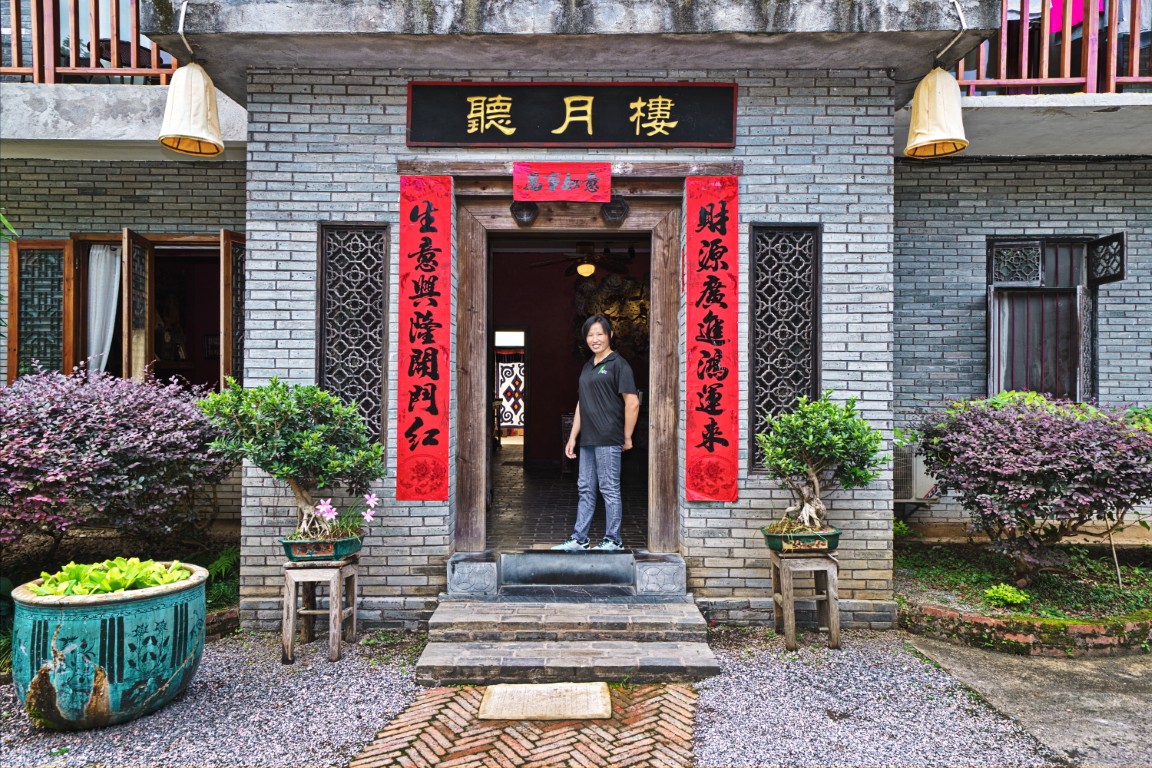
    Rachel runs Autumn Inn in a beautifully restored old house on Guzhen Lu, the ancient town’s main street. It’s small, charming, and feels more like staying in someone’s carefully designed home than checking into a hotel.

    What makes Rachel’s place special is hospitality done right. She speaks excellent English. She personally helps guests plan trips. She’s created a space that balances old-house character (traditional architecture, local touches) with modern comfort (good beds, clean bathrooms, excellent coffee).

    Reviews repeatedly call her “the best hotel manager I’ve ever met in China” and “absolutely amazing.” Guests mention the cat (Guanjia) and dog (Zaizai) by name. They talk about Rachel upgrading rooms for free, helping with logistics, and making them feel genuinely welcome.

    It’s the boutique end of family-run hospitality—small scale, owner-operated, personality-driven, but with attention to design and comfort that appeals to travelers who want charm and a good night’s sleep.

    What guests notice:

    • Rachel’s personal warmth and hands-on management
    • Beautiful interior design in converted old house
    • Quiet village setting—”skip Yangshuo, come to Xingping”
    • Walkable to all Xingping scenic areas
    • Cat and dog add homey atmosphere
    • “Small hotel full of charm… unique place”

    Best for: Couples, photographers, travelers who want boutique comfort with authentic character, anyone seeking a peaceful base in Xingping rather than busy Yangshuo.


    What These Four Have in Common

    After working in Yangshuo tourism for over a decade, I can tell you what separates these four from the dozens of other guesthouses I’ve visited:

    The owners are present. Gloria, Little Fish, Eric, Sammie, Jane, Rachel—they’re not absentee investors collecting rent. They’re there. They know your face. They remember if you came back.

    Personality matters more than perfection. These places have quirks. Village Inn’s solar water heaters mean sometimes means waiting five minutes on cold days for the water to heat up. Monkey Jane’s rooms are dated. Xingping is 25km away. But guests don’t care because the experience is what matters—and the experience is shaped by people, not amenities.

    They’re integrated into their communities. Village Inn sources from neighborhood farms. Eden Inn is embedded in Chaolong Village life. Jane knows everyone. Rachel is part of Xingping’s community. They’re not tourism operations dropped onto a location—they’re of the place.

    They adapted and innovated. Village Inn added cooking school and mastered Chinese social media. Eden Inn went multilingual when most places stayed Mandarin-only. Monkey Jane built a legendary rooftop bar. Rachel created boutique charm in a quiet ancient town. They didn’t just copy what everyone else was doing—they found their own path.


    Why Family-Run Places Are Disappearing

    I need to be honest about something: most family-run guesthouses in Yangshuo are gone not because they failed, but because running one is exhausting and often not worth the effort.

    You’re competing against hundreds of other places, who are mostly run by urban Han Chinese who are typically more sophisticated about business and tech. You need to learn English, master booking platforms, handle marketing, manage staff, fix maintenance issues, deal with difficult guests, and work basically every day with no real time off.

    Meanwhile, outsiders will offer to rent your building for guaranteed monthly income. No stress or midnight emergencies. No learning how to use Ctrip or Xiaohongshu. Just steady money. For a family that’s been farming rice for generations, that’s not selling out—that’s smart economics.

    And the hotels that replaced them aren’t necessarily bad. Many are well-run, professional, clean, and offer good service. They provide jobs. They bring tourism income to the region. What they don’t offer—what they mostly can’t offer, is the personal connection that comes from staying with people who genuinely care because it’s their family’s reputation, their home, their life’s work. That’s what’s disappearing. Not because it’s worse. Because it’s harder.


    The Changing Face of Yangshuo Tourism

    When I was a kid, Yangshuo was a Western backpacker town. West Street had small family guesthouses, cheap noodle shops, and travelers from all over the world sitting on rooftops planning bike trips through rice paddies. Then Chinese domestic tourism exploded.

    Suddenly there were tour buses, group tours, massive hotels, and hundreds of new “boutique minsu” operations. Investment poured in. The town got wealthier, more developed, more professional. It also got more… the same.

    Walk into most “boutique minsu” today and you could be anywhere in China. Same marble lobby with uniformed staff, wearing a number on their employee badge. Same uninspired breakfast buffet. The guest rooms look great in photos but have zero personality. The owners aren’t local, they’re investors from Shenzhen or Guangzhou or Beijing who saw an opportunity and took it. The staff often don’t come from Yangshuo. The food isn’t from neighborhood farms, it’s from regional suppliers.

    It’s efficient. professional and consistent. It’s also completely impersonal. You’re not staying in Yangshuo, you’re staying in a Yangshuo-themed hotel that could exist anywhere.


    Why These Four Still Matter

    The four guesthouses in my article represent something that’s almost extinct in Yangshuo: places where the people serving you are personally invested in whether you enjoy your stay. Not because they’re trained to care., but because they actually care.

    When Gloria helps you plan a bike route through back villages, she’s sending you to places her family has known for generations, not reading from a tour company script. When Eric sits at the bar helping you figure out tomorrow’s itinerary, he’s sharing actual local knowledge, not corporate-approved recommendations. When Jane challenges you to beer pong and then cooks you dinner, she’s creating the kind of spontaneous, personality-driven experience that no hotel would ever authorize. When Rachel upgrades your room and makes you excellent coffee while her cat wanders around, you’re experiencing hospitality that comes from someone who genuinely wants you to love Xingping.

    These aren’t better because they’re fancier. They’re better because they’re real. And in a town where “authentic local experience” has become meaningless marketing language, real still matters.


    How Long Will They Last?

    I don’t know. Gloria and Little Fish aren’t getting younger. Jane has been doing this for 22 years—that’s an incredible run, but it’s exhausting. Eric and Sammie have transitioned to a new management team. Rachel is competing against newer, shinier boutique hotels in Xingping. Economics and exhaustion eventually win.

    The four places in this article survived because their owners had the energy, personality, and stubbornness to keep going when it was easier to quit. But that’s not sustainable forever. When they’re gone, I don’t know if anything will replace them that feels the same. Yangshuo will still have hundreds of hotels calling themselves “minsu.” They’ll have better marketing, more professional service, nicer lobbies, and perfectly consistent experiences. They just won’t have soul.


    Worth Visiting

    If you’re coming to Yangshuo and you want to understand what made this town special before it became a mass tourism destination, stay at one of these four places. Not because the others are terrible, but because these four offer something different: the feeling that someone actually cares.

    You’ll get imperfect service, quirks and inconveniences. You’ll get breakfast served by someone who wants to know if you liked yesterday’s bike ride and has suggestions for today. You’ll get the thing that used to define Yangshuo hospitality: warmth. And in 2026, that’s rare enough to be worth seeking out.


    How to Book

    Yangshuo Village Inn
    Website: yangshuoguesthouse.com
    Email: reservations@yangshuoguesthouse.com
    Phone: +86-773-877-8169
    Location: #26 Li Cun, Moon Hill Village

    Eden Inn
    Search “Yangshuo Eden Inn” on major booking platforms
    Location: No. 8 Chaolong Village, Yangshuo County

    Monkey Jane’s Guesthouse
    Search “Monkey Jane’s Yangshuo” on booking platforms
    Location: Central Yangshuo, alley behind Guihua Rd

    Xingping Autumn Inn
    Search “Yangshuo Xingping Autumn Inn” or “Autumn Inn Xingping”
    Location: Guzhen Lu, Xingping Ancient Town


    For more local Yangshuo recommendations from someone who actually grew up here, check out our guides to Yangshuo outdoor adventures, Yulong River bamboo rafting, and things to do in Yangshuo.

    Sabrina Mo has been a local guide at Yangshuo Mountain Retreat since 2015. She grew up in Yangshuo and has led hundreds of tour groups through the region’s villages, rivers, and mountains.

    Frequently Asked Questions

    What’s the difference between these homestays and regular Yangshuo hotels?

    These four are family-run and owner-operated, meaning the people serving you are personally invested in your experience, not because it’s their job, but because it’s their family business and reputation. Regular hotels offer professional service from trained staff who go home when their shift ends. The difference is whether someone genuinely cares versus someone who’s trained to appear like they care.

    Are family-run homestays cheaper than boutique hotels?

    Not necessarily. Prices at these four range from budget (Monkey Jane’s) to mid-range (¥200-600 per night), which is similar to many “minsu” hotels in Yangshuo. You’re not choosing based on price. You’re choosing based on whether you want impersonal efficiency or personal warmth. Both cost about the same.

    Which homestay is best for families with children?

    Yangshuo Village Inn at Moon Hill is excellent for families—spacious Farmhouse rooms, safe courtyard environment, cooking classes kids enjoy, and Gloria and Little Fish are experienced with family needs. The location near Moon Hill gives children space to explore without traffic dangers, and the pomelo grove is a natural playground.

    Can the owners really speak English at these places?

    Yes. Gloria and Little Fish at Village Inn speak excellent English after 16+ years of hosting international guests. Eric and Sammie at Eden Inn are multilingual (English, French, Spanish). Jane at Monkey Jane’s speaks English well enough to organize trips and teach dumpling-making. Rachel at Autumn Inn has excellent English repeatedly praised in reviews. This is a major advantage over many Yangshuo hotels where staff have limited English.

    Why are family-run homestays disappearing in Yangshuo?

    Running a family guesthouse is exhausting: 16-hour days, no time off, constant learning (English, booking platforms, marketing), and competing against professional hotel operators with more capital and expertise. Many families found it easier to rent their buildings to outsiders for steady monthly income rather than working constantly. It’s not failure, just rational economics. The families who continue doing it are the stubborn, passionate ones.

    Is Xingping better than Yangshuo for staying?

    Depends what you want. Xingping Ancient Town (where Autumn Inn is located) is quieter, more authentic, and closer to the famous Li River scenery (20 RMB note photo spot). Yangshuo town has more restaurants, bars, and nightlife. For peaceful scenery and photography, Xingping wins. For social atmosphere and convenience, Yangshuo wins. Both are worth experiencing.

    What makes Monkey Jane’s rooftop bar so legendary?

    Jane herself. She’s been running it since 2004, challenges guests to beer pong (and reportedly never loses), creates a social atmosphere where solo travelers immediately meet people from six countries, and charges cheap drink prices with incredible karst mountain views. It’s not fancy—it’s personality-driven. Backpackers have been telling each other about it for 20 years, which is the best marketing any bar could have.

    Do these homestays offer the same amenities as big hotels?

    No, and that’s the point. You won’t get fancy lobbies, saltwater pools, or 24-hour room service. You’ll get solar-heated water (sometimes tricky), family-cooked breakfasts, owners who remember your name, and actual local knowledge about hidden trails and village restaurants. Choose based on what matters more: amenities or authenticity.
  • How to Get to Yangshuo from Guilin Transportation Guide 2026

    How to Get to Yangshuo from Guilin Transportation Guide 2026

    Getting to Yangshuo: Your Complete Transportation Guide

    There are a number of easy options from Guilin to Yangshuo. Here we recommend several of the most popular ways by our many guests in recent years, updated for 2026.

    From Guilin Airport

    There are direct airport shuttle buses that run from Guilin Liangjiang International Airport to Yangshuo (¥50, 90 minutes). Buses depart at 09:30, 11:00, 12:30, 14:00, 15:30, 16:30, 18:00, 20:00, and 22:30. Purchase tickets near the arrivals exit and buses stop at Yangshuo bus station. If you are heading to Yangshuo Mountain Retreat, you can call us on arrival in Yangshuo and we can send a car which takes about 10 minutes from time of calling to arrival. From Yangshuo Bus Station to Yangshuo Mountain Retreat takes roughly 20 minutes by car.

    From the bus station it is about a 25-minute walk to West Street. Address: 广西壮族自治区桂林市阳朔县阳朔镇千古情大道2号

    Yangshuo Bus Station on Google Maps

    Alternatively, book a private transfer through Yangshuo Mountain Retreat for door-to-door service.

    By Train from Guilin to Yangshuo

    You can take high speed rail from Guilin to Yangshuo but you need to make sure which station you’re leaving from (Guilin Station, Guilin West Station or Guilin North Station). On any Southbound train to Guangzhou, and some trains to Hong Kong, there is a stop in Yangshuo, but it is actually in XIngping Town, located 40 minutes south of Yangshuo town. The train from Guilin to Yangshuo is 30 minutes travel time and costs about $30-$40. From Guilin, it is faster to take a car for $90 in which 2-3 people can travel. Yangshuo Mountain Retreat can arrange transport for our guests, either sedans or vans.

    From Guilin to Yangshuo by Taxi

    A taxi from Guilin city or airport to Yangshuo costs aroud ¥260-400 depending on vehicle type and whether you take the G65 highway (adds ¥30 toll but saves 30 minutes). If you have WeChat or Alipay, you can book a Didi (ride hailing) for a little less and often a newer electric car. The price is slightly below a normal taxi, but you need a credit card or China bank account to prepay the ride. We recommend you take the G65 highway direct to Yangshuo Mountain Retreat or Yangshuo town, exiting at Gaotian, very near to Yangshuo Village Inn.

    How to get around Yangshuo?

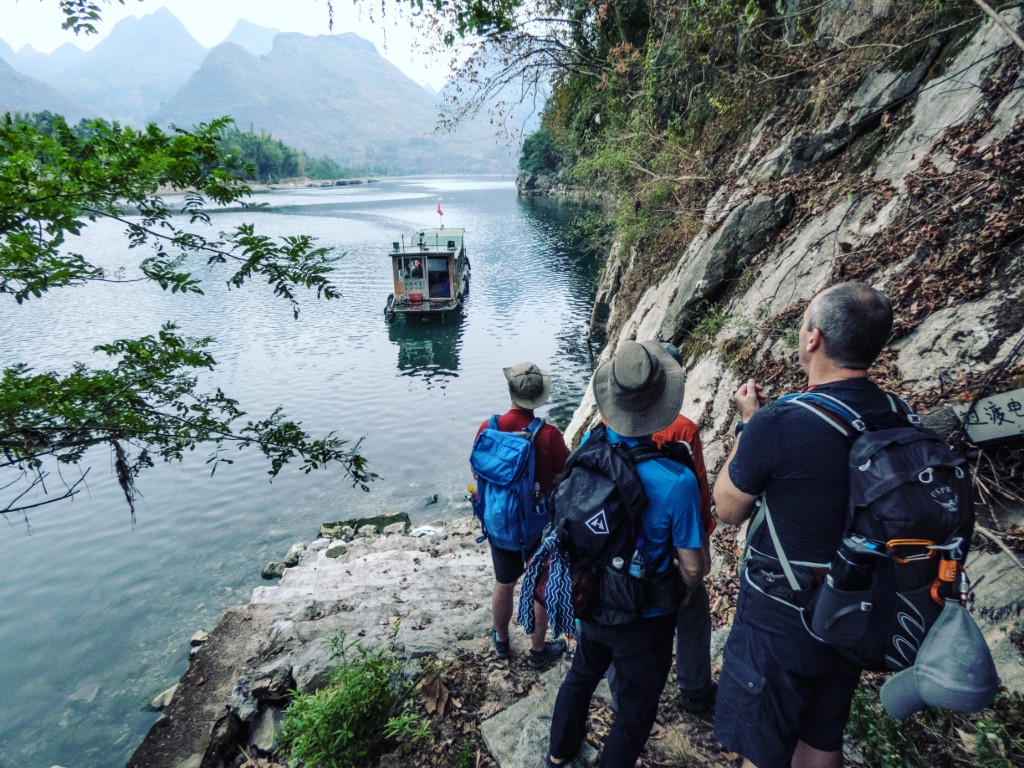
    Yangshuo is a very walkable town. However, there is West Street and the town center and the rest of Yangshuo County, which has many natural attractions. Mostly you can go by bike, but if you want to explore on your own, you can rent a scooter. There are also many meter taxis available everywhere, as well as Didi ride hailing app, also available through WeChat and Alipay. From Yangshuo town center you can ride a bike to the Yulong River 10 Mile Gallery and Yangshuo Mountain Retreat in about 40 minutes. Caves and climbing routes are also not far away from this area.

    Guilin to Yangshuo travel times

    Guilin City is 65 kilometers from Yangshuo, which takes anywhere from an hour to 90 mintes depending on mode of transport. We suggest that travelers not focus on price, unless time is not a factor. You can save $20 by taking the train from Guilin to Yangshuo, but then you need to get a taxi or hotel car from Yangshuo station, eliminating any savings over a direct taxi ride and taking an extra 40 minutes on the road. Overall, a Didi, taxi or hotel car are always the best way to go from Guilin to Yangshuo in that order. For Yangshuo Mountain Retreat guests, we always suggest guests book one of our cars, which costs the same as a taxi.

    Li River Cruise to Yangshuo

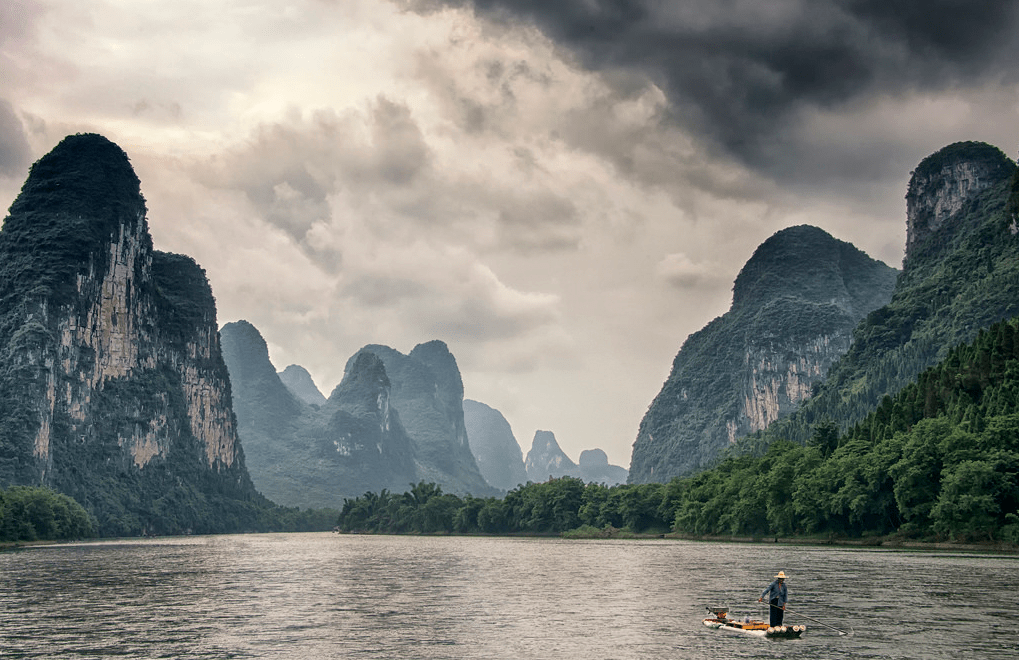
    This is a must-do for those travelers who can spend half a day on the river. The landscape is stunning and boats are air-conditioned for hot or cold days. Tickets are available at every hotel in Guilin and at any travel agency inthe city. The boat takes you to Longtou Wharf or Yangshuo Wharf, where guests of Yangshuo Mountain Retreat can have a car to our hotel waiting for them nearby.

    FAQ

    Is there a train from Guilin to Yangshuo?

    Yes! Yangshuo has its own high-speed railway station with direct trains from Guilin (30 minutes), Guangzhou (3 hours), Shenzhen, and other major cities. The station is about 30 minutes from Yangshuo town center. Take a taxi (¥40-60) or arrange hotel pickup. Yangshuo Mountain Retreat can arrange transportation from the train station.

    How do I get from Guilin Airport to Yangshuo?

    Direct airport shuttle buses run from Guilin Liangjiang International Airport to Yangshuo (¥50, 90 minutes). Buses depart at 09:30, 11:00, 12:30, 14:00, 15:30, 16:30, 18:00, 20:00, and 22:30. Purchase tickets near the arrivals exit and buses stop at Yangshuo bus station. Alternatively, book a private transfer through Yangshuo Mountain Retreat for door-to-door service.

    How much does a taxi from Guilin to Yangshuo cost?

    A taxi from Guilin city or airport to Yangshuo costs ¥260-400 depending on vehicle type and whether you take the G65 highway (adds ¥30 toll but saves 30 minutes). Book through your hotel to avoid overcharging. Yangshuo Mountain Retreat offers private car service with English-speaking drivers for reliable, transparent pricing.

    What’s the best way to get around Yangshuo?

    Bicycles are the most popular way to explore Yangshuo’s countryside. Yangshuo Mountain Retreat provides complimentary bikes for guests. Electric scooters (¥80-120/day) offer more range. In town, electric minibuses cost ¥1 per ride. Taxis charge ¥8-15 for short trips, while motorbike taxis cost similar rates for quick transfers.

    How far is Yangshuo from Guilin and how long does it take?

    Yangshuo is 65 kilometers (40 miles) south of Guilin city. Travel times vary by method: high-speed train (30 minutes), direct bus (50-70 minutes), airport shuttle (90 minutes), or taxi (60-90 minutes depending on route). The scenic Li River cruise from Guilin to Yangshuo takes 4-5 hours and is a popular option for first-time visitors.

    Can I take a Li River cruise from Guilin to Yangshuo?

    Yes! The Li River cruise is a scenic 4-5 hour journey from Guilin to Yangshuo, featuring stunning karst mountain landscapes including the famous 20 RMB note scenery. Cruises depart morning from Zhujiang Pier in Guilin and arrive at Yangshuo’s waterfront. Book in advance as this is extremely popular. Yangshuo Mountain Retreat is conveniently located near the river landing.

    How do I get to Yulong River?

    The Yulong River is located Southwest of Yangshuo Town about 4.7km on back roads. It is an easy bike of about 20 minutes to Jima Village, then down to Chaolong Village or up to Jiuxian Village. Heading South along the river road by bike from Chaolong Village 4.2km takes you to Yangshuo Mountain Retreat, with direct river access. You can also take a car on the main road from town (Pantao Lu to Kangzhang Lu) and 15 minutes or 5.7km to the Gong Nong Bridge across the Yulong. Before you cross the bridge, turn right and follow the river road 1.5km to Yangshuo Mountain Retreat where the 13km riverwalk path begins.

    See more about Getting from Guilin to Yangshuo here.

  • Best Time to Visit Yangshuo

    Best Time to Visit Yangshuo

    Your 2026 month-by-month guide to seasonal information

    Based on 25 years of Yangshuo Mountain Retreat guest feedback and our wealth of local knowledge, each season in Yangshuo offers different experiences and challenges. Our insider’s guide breaks down what to expect each month, For detailed temperature and rainfall data, visit our complete Yangshuo weather page.


    January: Mystical Mist & Solitude

    Temperature: 8-15°C (46-59°F)
    Crowds: Very Low
    Best For: Photography, hiking, biking

    January brings misty mornings that swirl around the karst peaks—absolutely magical for photographers. Yes, it’s cold (especially at night, down to single digits), but crisp, clear days are perfect for outdoor activities without the summer heat and humidity. We light our hearth daily and serve mulled wine to warm guests after river walks.

    Insider Tip: Pack layers! Days can reach 18°C in the sun, but mornings are chilly. This is our quietest month, meaning lower prices and the trails to yourself. Have a waterproof shell for drizzly days.


    February-March: Perfect Climbing Weather

    Temperature: 12-20°C (54-68°F)
    Crowds: Low (except during Chinese New Year/Spring Festival)
    Best For: Rock climbing, bamboo rafting, cycling

    February and March offer ideal conditions for rock climbing—dry, cool weather with low humidity. The Yulong River flows slowly, making bamboo rafting peaceful and less crowded, (but also slower)! Rice fields begin flooding in late March, preparation for planting, creating mirror-like reflections of the mountains, especially in the Longsheng Rice Terraces.

    Festival Alert: Chinese New Year (late January/early February) brings higher prices and crowds. Book well in advance or avoid this week entirely.


    April: Blooming Beauty

    Temperature: 18-25°C (64-77°F)
    Crowds: Moderate
    Best For: Cycling, photography, all outdoor activities

    April is arguably Yangshuo’s most beautiful month. Flowers bloom everywhere, temperatures are comfortable, and the landscape explodes with green. It’s before the heavy rains and heat of summer, making it perfect for exploring by bike. At Mountain Retreat, we see guests spending full days cycling to Moon Hill, the Ten Mile Gallery footpath, and ancient villages like Jiuxian.

    Book Ahead: Qingming Festival (early April) drives prices up slightly and fills hotels.


    May: Pre-Summer Rush

    Temperature: 22-30°C (72-86°F)
    Crowds: HIGH (especially during May Day, May 1-5)
    Best For: River activities, early morning hikes

    May starts warm and gets hot quickly. Labor Day holiday (first week of May) is one of China’s busiest travel periods—expect crowds and premium prices. After May 5th, things calm down, but humidity begins climbing alongside temperatures.

    Insider Tip: If visiting in May, come after the 7th. You’ll save money and avoid the holiday crowds while still enjoying mostly pleasant weather.


    June: Rain Arrives

    Temperature: 25-32°C (77-90°F)
    Crowds: Moderate
    Best For: Cave exploration, indoor activities

    Before the start of Summer school holiday, June marks the real start of rainy season. Humidity hits 100%, and afternoon thunderstorms become regular. The upside? Fewer tourists and the landscape is lush and vibrant. Swimming in the Yulong River or exploring cool caves becomes essential.

    Skip If: You’re planning extensive hiking or don’t handle humidity well. Bring quick-dry clothing for outdoor adventures, which are best when humid days make dry laundry more challenging.


    July-August: Peak Season Heat

    Temperature: 28-35°C (82-95°F)
    Crowds: VERY HIGH
    Best For: Swimming, cave adventures, air-conditioned cafés

    Our busiest months. Chinese summer holidays bring families from across Asia, and temperatures soar into the mid-30s with steamy humidity. At Mountain Retreat, guests spend mornings on activities and afternoons in our waterfall pool or under the shade of our osmanthus trees by the Yulong River. The air conditioning runs constantly, and cold beers sell out daily.

    Real Talk: If you have flexibility, avoid July-August. It’s hot, crowded, and expensive. But if you must come, book months in advance and embrace the heat with water activities.


    September: Transition Month

    Temperature: 25-32°C (77-90°F)
    Crowds: Moderate (except Mid-Autumn Festival)
    Best For: Post-rain landscapes, outdoor activities resume

    Early September still feels like summer—hot and humid. But by mid-month, things begin cooling down. The Mid-Autumn Festival (usually mid-September) brings another price spike and crowds, but the full moon celebrations are beautiful.

    Insider Tip: Late September is underrated. Weather improves, crowds thin, and the countryside is stunning after months of rain. Be careful if your late September booking runs into the first week of October and the chaos that is Chinese National Day “Golden Week” (October 1-7).


    October: Peak Season Returns

    Temperature: 18-28°C (64-82°F)
    Crowds: HIGH (especially first week, National Day)
    Best For: Hiking, cycling, rock climbing, all outdoor activities

    October is Yangshuo’s second peak season, and for good reason—the weather is nearly perfect. National Day holiday (October 1-7) brings massive crowds and top prices. After October 7th, weather remains excellent but crowds ease significantly.

    Local Secret: Late October is when serious climbers arrive. Cool, dry conditions make it the best climbing month of the year.


    November-December: Hidden Gem Season

    Temperature: 12-20°C (54-68°F)
    Crowds: Very Low
    Best For: Everything—without the crowds!

    Here’s where I’ll be blunt: November and December are Yangshuo’s best-kept secret. The weather is crisp and comfortable, rock climbing conditions are perfect, bamboo rafting is peaceful, and hiking is ideal. Yes, you’ll need a jacket for mornings and evenings (nights drop to 5-8°C), but daytime temperatures reach 15-20°C in the sun.

    At Mountain Retreat, we light our hearth daily, serve mulled wine, and offer our lowest prices of the year. The landscape may not be as green as summer, but the clear air, stunning light for photography, and empty trails more than compensate. Some days can be drizzly, but plenty are crisp and clear.

    Why Visit Now:

    • 30-40% lower accommodation prices
    • No crowds at scenic spots
    • Perfect hiking/biking/climbing weather
    • Cozy atmosphere at hotels (hearths, warm drinks, comfort food)
    • Best photography light of the year
    • Bamboo rafting without queues

    What to Pack: Layers! Thermal base layers for mornings, but you’ll strip down by midday. Rain jacket is a must for occasional drizzle.


    Quick Reference: When to Visit by Interest

    Rock Climbing: Late October-November, February-March
    Cycling/Hiking: October-December, March-April
    Photography: November-January (mist and clear light), April (blooms)
    Swimming/Water Activities: May-September
    Bamboo Rafting: November-March (slower river, fewer people)
    Budget Travel: November-February (excluding Chinese New Year)
    Avoiding Crowds: November-February (excluding Chinese New Year), June, September


    Festivals That Impact Prices & Availability

    • Chinese New Year/Spring Festival: Late January or early February
    • Qingming (Tomb Sweeping) Festival: Early April
    • May Day (Labor Day): May 1-5
    • Dragon Boat Festival (Duanwujie): Late May/June
    • Mid-Autumn Festival: Mid-September
    • National Day: October 1-7

    During these periods, expect 50-100% price increases and hotels booking out months in advance. Be advised, Lunar New Year, Mid-Autumn Festival and other folk holidays fall on different days each year. Look ahead to get the days you want to avoid holiday crowds.


    Final Recommendation from 24 Years of Hosting

    If you have flexibility, come in November, early December, late March, or April. You’ll experience Yangshuo at its best—comfortable weather, manageable crowds, and authentic local experiences.

    If you must travel during peak season (July-August, October), book 2-3 months ahead and embrace the energy of high season. Just know what you’re getting into.

    For detailed weather statistics and what to pack, visit our Yangshuo weather page.

    FAQ

    What is the best month to visit Yangshuo?

    October and November offer the best combination of weather and experience. October has perfect temperatures (18-28°C) but crowds during National Day (Oct 1-7). November has similar weather with far fewer tourists and 30-40% lower prices. For rock climbing specifically, late October through November is ideal.

    What’s the weather like in Yangshuo in winter?

    Winter (November-February) is cool and comfortable for outdoor activities. Daytime temperatures reach 12-20°C, perfect for hiking, biking, and climbing. Nights drop to 5-10°C, so pack layers. November and December have the clearest skies of the year, though January can be misty (great for photography). Rain is minimal compared to summer.

    When should I avoid visiting Yangshuo?

    Avoid July-August if you dislike extreme heat and humidity (28-35°C with 100% humidity) or crowds. Also skip National Day week (Oct 1-7), May Day week (May 1-5), and Chinese New Year if you want lower prices and availability. These periods see 50-100% price increases.

    Is Yangshuo too hot in summer?

    Summer (July-August) is very hot and humid. Temperatures reach 28-35°C with near-100% humidity and regular afternoon thunderstorms. Most visitors spend mornings on activities and afternoons swimming or in air-conditioned spaces. If you can’t handle heat and humidity, visit in spring (March-May) or autumn (October-November) instead.

    When is rock climbing season in Yangshuo?

    Peak climbing season is late October through November and again in February-March. These months offer cool, dry conditions (15-25°C) with low humidity. Summer (June-September) is too hot and humid, while winter can be chilly but still climbable for dedicated climbers.

    Does it rain a lot in Yangshuo?

    Rainy season runs from mid June through early September, with June being the wettest month. Expect afternoon thunderstorms and 100% humidity. Spring (March-May) has occasional rain but mostly sunny days. November through February is the dry season with minimal rain and clear skies—best for outdoor activities.

    When is the cheapest time to visit Yangshuo?

    November through February (excluding Chinese New Year week in late January/early February) offers the lowest prices—typically 30-40% cheaper than peak season. June and September also have moderate prices with fewer crowds. Avoid major Chinese holidays (May Day, National Day, Chinese New Year) when prices double.

    What should I pack for Yangshuo in autumn?

    The Ten Mile Gallery runs 14km along the Yulong River from Gongnong Bridge to Yulong Bridge. From Yangshuo Town, take Kangzhang Lu and turn right before Gongnong Bridge. The route passes through scenic villages like Chaolong, Xiatang, and Jiuxian, ending at Yulong Bridge Scenic Area with its riverside restaurant and evening dragon boat lantern show.

    For autumn (October-November), pack layers: light long sleeves for daytime, a warm fleece or jacket for mornings/evenings, and comfortable clothes for outdoor activities. November gets cooler (12-20°C), so bring thermal layers for early mornings. Always pack a light rain jacket year-round.


    See more about Yangshuo Weather here.

  • Getting Around Yangshuo: Transportation Guide to Scenic Spots 2026

    Getting Around Yangshuo: Transportation Guide to Scenic Spots 2026

    Your complete transportation guide to insider routes, rates and tips from locals

    Getting around Yangshuo is easier than ever in 2026 with the abundance of ebikes, scooters, and ride hailing apps. Here are our top recommendations based on Yangshuo Mountain Retreat’s most common guest queries.

    How to get to Moon Hill

    Moon Hill is located opposite Yangshuo VIllage Inn in Li Cun (Li Village or Moon Hill Village). There is a ticket price of 13 yuan for locals, but the foreigner price is 20. If you have a student card or resident visa you can show them and try for the local price, especially if you are friendly, polite and speak a little Chinese. As of December 2025, the park has been closed due to an unresolved conflict between the County Government and a private tourism company that ran the park for a few years. Check with Yangshuo Mountain Retreat reception to see if it’s resolved when you visit.

    Getting There: Follow Kangzhang Lu out of town if you are on a scooter or bike for 7.5km, past the Gonnong Bridge and Fenglou Village anout 500m. The Moon Hill park entrance is just opposite and down the road 200m from Li Cun and Yangshuo Village Inn.

    Getting to Xingping from Yangshuo

    You can take a taxi or Didi from town for 45 minutes or 29km. The price varies but should be between 70-100 RMB depending on point of departure. Yangshuo Mountain Retreat offers a private car half-day round trip for 250 RMB, including a photo opportunity of the famour 20 yuan note mountain and a motorized boat trip on the Li River. Departure times are flexible. The Xingping old town is worth an hour or two wandering around and having a coffee. Note that the route to Xingping is mostly busy motorway and not recommended by bike. Travel by scooter is possible but a car is by far the best option.

    How to get to Liusanjie

    By car from town or Yangshuo Mountain Retreat, the Liu Sanjie show (opposite Mushan Village on Tianyuan Lu) is about the same distance of 4km and 15 minutes drive. Mountain Retreat offers private round-trip cars for 110 for a sedan, 150 for a van. A didi will cost 30 yuan each way. The crowds at this show are enormous (over 1,000 people) and it may be difficult for cars to get in and out for pickup and dropoff, so it’s recommended to have our hotel car and driver drop you and wait for you.

    How to get to the Li River in Yangshuo?

    Yangshuo is a rural county but the town of Yangshuo sits along the Li River, with access to riverboats from Guilin. There are some hotels set back above the Li River across from the town or upriver a few kilometers, but to get to the Li River from Yangshuo, just walk up West Street (the main pedestrian street in Yangshuo) until you come to Binjiang Lu. Binjiang Lu, which runs along the Yangshuo Town side of the Li River, is also accessible from Die Cui Lu, a busy commercial street with banks, personal care shops and small food outlets. Not far fro here you’ll find our favorite places such as The Groove See our Yangshuo Bars post or Yangshuo bars website page) and Ganga Impression Indian Cuisine. See our Yangshuo Restaurants post or Yangshuo Restaurants website page.

    Also upriver 500m from the junction of Diecui Lu and Binjiang Lu is our favorite pizza and craft beer spot DEMO, with views of the river from their deck. Keep going another 2km up river and you will reach the Li River Resort, perched high on an embankment.

    Can I bike to Moon Hill from Yangshuo?

    Moon Hill Yangshuo is easily accessible by bike, just 8km from Yangshuo Town or or 3.5km from Yangshuo Mountain Retreat. From town it’s 40 minutes by bike, but from Yangshuo Mountain Retreat there are back roads through scenic Fenglou Village that make the trip just 20 minutes by bike or 45 minutes pleasant walking. The park is on the old 321 National Road, which is busy but has bike lanes. A scooter or ebike is faster and can rented at Mountain Retreat.

    Where can I rent a bike in Yangshuo?

    Bikes are available at most hotels and at Bike Asia as part of their tours. Bike rental is complementary at Yangshuo Mountain Reteat and we have the newest ebikes available as well as electric scooters for guests. Check out bike and scooter rentals along Pantao Lu, just down Die Cui Lu from Yangshuo Park. Guests of Yangshuo Village Inn also have access to complimentary bike rental.

    How do I get to 10-Mile Gallery in Yangshuo?

    Yangshuo 10-Mile Gallery lies along the Yulong River from Gongnong Bridge also called “Lansheng Qiao”to the Yulong Bridge, almost 14km in total distance. Entering from Yangshuo Town along Kangzhang Lu (old 321 National Road), turn right just before the Gongnong Bridge toward Yangshuo Mountain Retreat, which is 1.5km up the road. From the Mountain Retreat you have the option to follow a footpath along the Yulnog River (recommended for scenery) or continue on the main road. Follow either up river with stops in Chaolong Village, the park near Xiatang Village, Jiuxian Village where you will also find the Secret Garden guesthouse, listed on our Yangshuo Hotels post. From here, carry on upriver to Xianggu Qiao, an ancient bridge, and another 4km to the Yulong Bridge Scenic area, which has a nice riverside restaurant on the opposite side of the river. In the evenings there is a dragon boat lantern show.

    FAQ

    How do I get to Moon Hill from Yangshuo?

    Moon Hill is 8km from Yangshuo Town, accessible by bike (40 minutes) or scooter. Follow Kangzhang Lu past Gongnong Bridge and Fenglou Village for 7.5km. The park entrance is opposite Yangshuo Village Inn. Note: As of December 2025, the park is closed due to a lawsuit – check with local hotels for updates.

    How do I get to Xingping from Yangshuo?

    Xingping is 29km from Yangshuo, best reached by taxi or Didi (70-100 RMB, 45 minutes). The route is busy motorway, not recommended for bikes. Private car services offer half-day round trips including the famous 20 yuan note photo spot and Li River boat trip.

    How do I get to Impression Liu Sanjie from Yangshuo?

    The Liu Sanjie show is 4km from Yangshuo town (15 minutes by car). A Didi costs about 30 yuan each way. Due to large crowds (1,000+ people), having a private car wait for you is recommended as pickups can be difficult.

    How do I get to the Li River from Yangshuo?

    The Li River runs through Yangshuo town. From West Street, walk north until you reach Binjiang Lu, which runs along the river. You can also access the river via Die Cui Lu. Popular riverside spots include The Groove bar, DEMO craft beer restaurant (2km upriver), and Li River Resort.

    Can I bike to Moon Hill from Yangshuo?

    Sure! Moon Hill is easily accessible by bike – 8km from Yangshuo Town (40 minutes) with bike lanes on the old 321 National Road. From nearby guesthouses like Yangshuo Mountain Retreat, scenic back roads through Fenglou Village make it just a 20-minute ride.

    Where can I rent a bike in Yangshuo?

    Bikes are available at most hotels in Yangshuo, including complimentary rentals at Yangshuo Mountain Retreat and Yangshuo Village Inn. You’ll also find bike and scooter rentals along Pantao Lu (off Die Cui Lu near Yangshuo Park), and through Bike Asia tours.

    How do I get to the Yulong River from Yangshuo?

    The Yulong River is 4.7km southwest of Yangshuo Town on back roads – an easy 20-minute bike ride to Jima Village. By car, take Pantao Lu to Kangzhang Lu (5.7km, 15 minutes) to Gongnong Bridge, then turn right and follow the river road. The scenic 13km riverwalk path begins at various access points along the route.

    How do I get to Ten Mile Gallery from Yangshuo?

    The Ten Mile Gallery runs 14km along the Yulong River from Gongnong Bridge to Yulong Bridge. From Yangshuo Town, take Kangzhang Lu and turn right before Gongnong Bridge. The route passes through scenic villages like Chaolong, Xiatang, and Jiuxian, ending at Yulong Bridge Scenic Area with its riverside restaurant and evening dragon boat lantern show.

    See more about Things to Do in Yangshuo here.