Setting a Daily Budget in Yangshuo for 2026
While fierce competition in mid-range hotels and restaurants have driven prices down, here’s how to avoid paying too much and getting the best value our of your Yangshuo budget.
The Real Cost of Yangshuo
Any budget guide will tell you Yangshuo costs $87 per day. That number is misleading. A backpacker sleeping in a hostel dorm and eating street noodles isn’t having the same trip as a couple staying riverside with mountain views, dining at actual restaurants, and hiring a private guide.
If you’re reading this, you’re probably not the $87/day traveler. You want to know: what does a good Yangshuo experience actually cost, and where should you spend your money?
Here’s what 25 years of running the first countryside hotel in Yangshuo has taught us about the real costs—and the real value.
What a Yangshuo trip actually costs
The honest answer depends entirely on when you visit:
Low Season (January-February): $150-200 per day for two people
Shoulder Season (March-June, September-December): $200-250 per day
Peak Season (July-August): $300 per day
Chinese Public Holidays: $400+ per day
These numbers assume you’re staying in quality countryside accommodation, eating at real restaurants (not tourist traps), doing one or two activities daily, and getting around by rented scooter or Didi. About half of your daily budget goes to accommodation—which matters more than most travelers realize.
Where to invest your Yangshuo budget
Not all spending is equal. Here’s where your money actually makes a difference to your experience.
Accommodation Location (Not Star Rating)
The single most important decision isn’t how much you spend on accommodation—it’s where you stay.
West Street area and the surrounding town area will cost you more than countryside hotels. You’ll pay premium rates to be surrounded by tourist shops and bars, with traffic noise until late at night. Then you’ll spend money on transport to actually reach the karst mountains, rice paddies, and rivers you came to see.
Countryside hotels offer better value and put you where the scenery actually is. There are now hundreds of guesthouses and hotels outside town with fiercely competitive rates. You’ll wake up to mountain views, have direct access to cycling routes and bamboo rafting, and most provide free bikes.
At Yangshuo Mountain Retreat, our budget rooms start at $65 per night in normal season, luxury rooms at $180. We’re 1.2 kilometers walking from the nearest bamboo raft pier, 30 minutes by bike to charming Jiuxian Village, and guests can cycle to rice paddies and karst viewpoints without getting in a car. That’s not a sales pitch—it’s the difference between being in Yangshuo town versus being outside in the Yangshuo countryside.
The luxury resort hotels (Banyan Tree, Sugar House) charge Hong Kong prices and put you far from everything. Yes, they’re beautifully designed properties, but you’ll spend significant money on transport for every activity, meal, or evening out. For most travelers, a well-located mid-range countryside hotel delivers better value than an isolated luxury resort.
Real restaurants
There are very few restaurants left on West Street—mostly just shops and bars. The actual good food is further up the side streets where locals eat.
Beer fish at Da Shifu costs about 120 RMB for two people. The owner won the original beer fish chef competition, and it’s arguably the most authentic version in Yangshuo. That’s about $17 USD for Yangshuo’s signature dish, prepared correctly.
Other places worth your money:
- Lucy’s on Guihua Lu (breakfast and simple Western food)
- DEMO on the Li River (live music, pizza, local beer)
- TK Pub (local craft beer on tap)
- Ganga Impression on Chengbei Lu (Indian food)
- The Groove (aldo on Chengbei Lu) Western food, local craft beer on tap, good for expats and locals)
You’ll spend 60-100 RMB per person including drinks for a good dinner at these places. That’s $9-15 USD. Compare that to tourist trap prices on West Street or in luxury hotel restaurants, and you’re looking at triple the cost for half the quality.
The side streets off West Street (Xianqian Jie, for instance) have bars worth visiting, but watch out for touts outside the big venues. If someone is aggressively trying to get you inside, the place probably isn’t good.
Activities that actually matter
Also see our Things to Do in Yangshuo post.
Yulong River Bamboo rafting: 320 RMB per raft (up to two people) from Jima Pier down to Gongnong Bridge. That’s about $45 USD for 1.5 hours on the Yulong River with a local raftsman poling you through the most scenic stretch. All bamboo rafts are government-operated and cost the same—the difference is route length. We recommend the shorter journey from Jima village (1.5 hours) rather than the longer routes. You’ll see the best scenery without the extra time adding much value.
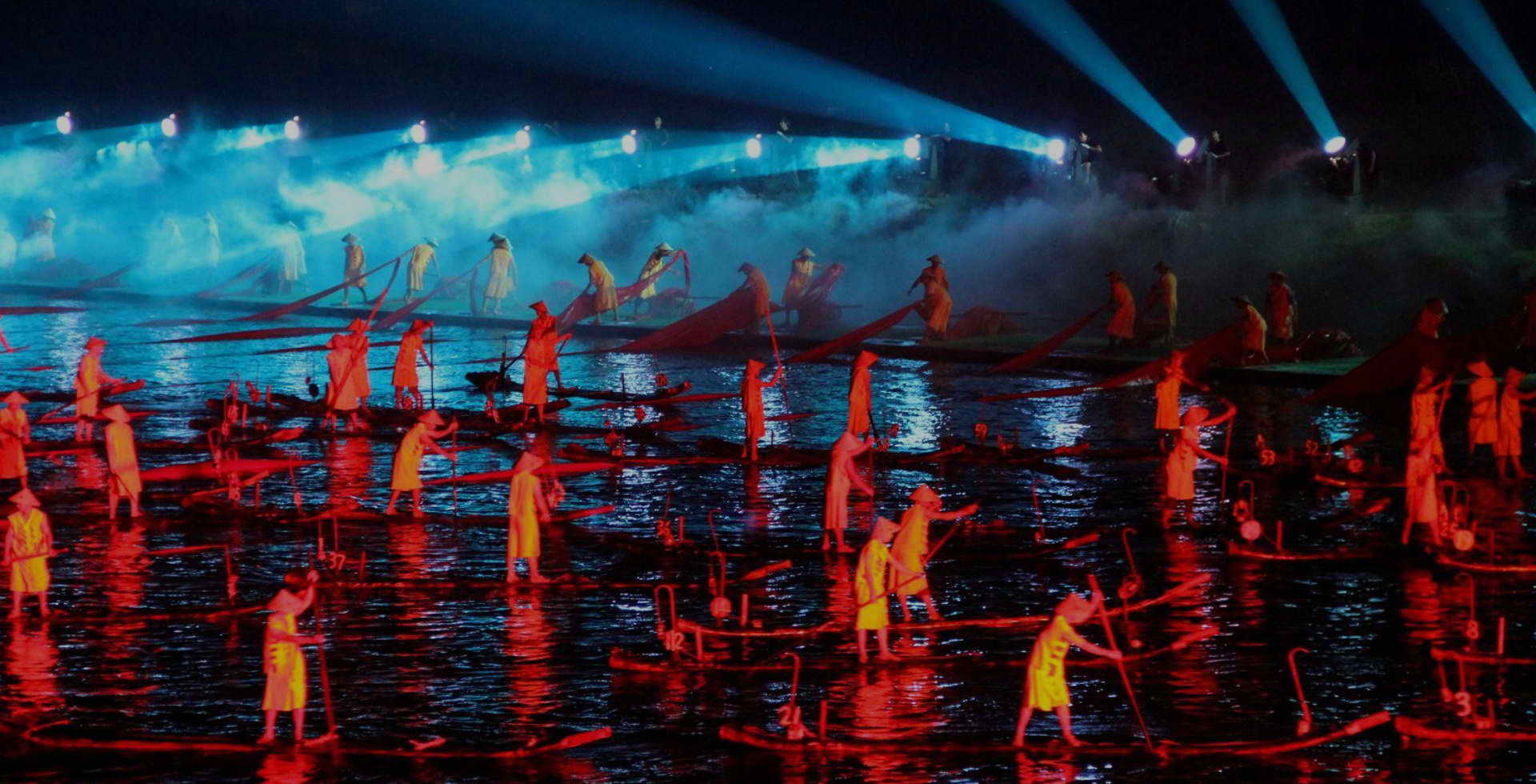
Impression Liu Sanjie: Worth seeing if you have two nights in Yangshuo. Tickets range from 238 RMB (back rows, plastic seats) to 688 RMB (VIP cabins with binoculars and snacks). The back rows on cane chairs (328 RMB) are perfectly fine—you don’t need the expensive box seats. The show itself is spectacular, staged on the Li River with karst mountains as the backdrop and hundreds of performers. But if you only have two nights and one is already planned for town dining and drinks, you could skip it without missing the essence of Yangshuo.
Private guide: 400-500 RMB per day ($60-75 USD). Worth it if you want specific local knowledge, help navigating activities, or someone to handle logistics in Chinese. Not necessary if you’re comfortable being independent, renting bikes or scooters, and using Didi for transport.
Scooter rental: 40-50 RMB per day ($6-7 USD). This is the best way to get around independently. Gives you flexibility to visit villages, cycling routes, and viewpoints on your own schedule.
The false economies
Here’s where travelers think they’re saving money but actually diminish their trip.
Staying Near West Street to “Be Central”
You’ll pay more to be in a noisy area surrounded by tourist infrastructure, then spend money on transport to reach the actual Yangshuo countryside. The karst mountains, rice paddies, bamboo rafting, and cycling routes are all outside town. Countryside hotels cost less, put you where the scenery is, and most provide free bikes. The “convenience” of West Street is largely an illusion—there are no good restaurants there anymore, just shops and bars.
Booking the Cheapest Accommodation
A $30/night guesthouse in town might seem like a bargain compared to a $65 countryside room. But you’re not comparing equivalent experiences. The cheap room puts you in cement and traffic noise. The countryside room puts you in the landscape you traveled to China to see. You’ll also spend more on transport, and you’ll likely eat worse food because you’re in the tourist zone.
The calculation isn’t $30 versus $65 per night. It’s whether you want to be in Yangshuo or adjacent to Yangshuo.
Expensive Bamboo Raft Routes or Liu Sanjie Seats
All bamboo rafting is government-operated at the same price. The longer routes don’t show you dramatically different scenery—they just take more time. The shorter Jima to Gongnong route (1.5 hours) covers the most scenic stretch of the Yulong River.
For Impression Liu Sanjie, the 688 RMB VIP seats with binoculars and snacks aren’t worth triple the price of the 328 RMB back rows on cane chairs. You’ll see the same show, and the back rows have better overall views of the spectacle anyway.
Beware of seasonal pricing
Yangshuo’s costs vary significantly by season, and this matters more than most budget guides acknowledge. See our Best Time to Visit Yangshuo post.
Low Season (January-February): About 10% less than normal season. Hotel rates drop, restaurants are quieter, and you’ll have more negotiating room. Weather can be cold and misty, but if you don’t mind that, you’ll get the best value.
Shoulder Season (March-June, September-December): The baseline pricing in this guide. Good weather, reasonable crowds, and full availability of activities and restaurants.
Peak Season (July-August): Costs increase about 30-50%. Domestic Chinese tourists dominate during summer holidays. It’s hot and humid. Book accommodation well in advance.
Chinese Public Holidays: Prices double and triple at most local hotels. At Yangshuo Mountain Retreat, we increase rates about 50%, but we’re conservative compared to the market. Holidays include Chinese New Year, National Day, Labor Day, Qing Ming, Mid-Autumn Festival, plus international school holidays (Easter, Christmas). If you have flexibility, avoid these periods entirely. The crowds are overwhelming, prices spike across the board, and the experience suffers.
Real costs breakdown for two people in shoulder season
Here’s what a day actually costs for travelers who want quality:
Accommodation: $100-180/night (countryside hotel, decent to luxury room)
Meals: $40-60/day (breakfast, lunch, dinner at real restaurants, not tourist traps)
Activities: $30-60/day (bamboo rafting, scooter rental, entrance fees)
Transport: $10-20/day (Didi within Yangshuo, or scooter rental)
Total: $200-250 per day for two people
That’s for mid-range quality—staying in a good countryside hotel, eating at the restaurants where food is actually good, and doing one or two activities daily.
In low season, you can trim this to $150-200. In peak season, expect $300. During Chinese public holidays, budget $400+ if you must go (but seriously, don’t go during holidays).
Transport from Guilin Airport to Yangshuo: 200-220 RMB by Didi ($30 USD). About 90 minutes. Many hotels offer pickup service for similar prices—book this in advance.
Transport from Yangshuo Train Station: 80-100 RMB by Didi ($12-15 USD). Note that “Yangshuo Station” is actually closer to Xingping, about 30-40 minutes from Yangshuo town.
Bamboo rafting (Yulong River): 320 RMB per raft, up to two people ($45 USD). From Jima Pier to Gongnong Bridge, 1.5 hours.
Impression Liu Sanjie tickets: 238-688 RMB depending on seating ($35-100 USD). The 328 RMB back rows on cane chairs offer the best value.
Beer fish dinner at Da Shifu: 120 RMB for two people ($17 USD).
Restaurant dinner (good quality): 60-100 RMB per person ($9-15 USD).
Scooter rental: 40-50 RMB per day ($6-7 USD).
Private guide: 400-500 RMB per day ($60-75 USD).
Bicycle rental: Usually free if staying at a countryside hotel. Otherwise 20-40 RMB per day ($3-6 USD).
Where not to spend your money
Tourist shops on West Street: Overpriced souvenirs that you’ll find cheaper literally anywhere else in China.
Package tours: These are designed for domestic Chinese tourists who don’t speak English and need everything arranged. If you’re reading this in English and capable of using Didi or renting a scooter, you don’t need a package tour. You’ll pay significant markups for convenience you don’t actually need.
Luxury resort isolation: Banyan Tree and Sugar House are beautiful properties, but they charge Hong Kong prices and you’re far from everything. Every meal, every activity, every evening out requires expensive transport. For most travelers, this isn’t where the value is.
Long bamboo raft routes: The scenery on the Yulong River is consistently beautiful, but the longer routes don’t show you dramatically different landscapes. The shorter Jima to Gongnong route captures the essence without the extra time and cost.
What this all means
If you’re the kind of traveler who skims to find “how much does Yangshuo cost” without reading any context, this guide probably isn’t helping you. The answer depends entirely on what kind of trip you want and when you’re going.
But if you’re willing to spend $150-250 per day for two people (varying by season), here’s what you get: quality countryside accommodation with mountain views, meals at restaurants where the food is actually good, one or two activities daily, and the freedom to explore by bike or scooter. You’ll wake up in the landscape you came to see, not in a town hotel where you then spend money reaching that landscape.
That’s not budget travel in the backpacker sense. But it’s not luxury travel either. It’s the middle ground where you’re comfortable, you’re experiencing real Yangshuo, and you’re not wasting money on tourist traps or false conveniences.
Yangshuo rewards travelers who invest in being in the right place more than travelers who spend heavily on high-end amenities in the wrong place. A well-located countryside hotel at $100/night delivers better value than an isolated luxury resort at $300/night. A $17 beer fish dinner at Da Shifu is more memorable than a $50 hotel restaurant meal.
The question isn’t “what’s the cheapest way to see Yangshuo?” The question is “what makes for a good Yangshuo experience, and what does that actually cost?”
Now you know.
Related posts
Best Time to Visit Yangshuo (2026 weather and seasonal guide)
How to Get to Yangshuo from Guilin: Complete Transportation Guide
Where to Stay in Yangshuo: Why Countryside Beats West Street
Best Yangshuo Restaurants