READ THIS ENTIRE GUIDE BEFORE BOOKING – Even experienced China travelers are getting caught out by entry port snags. There are limited immigration points where visa on arrival is allowed. We’ll tell you exactly what happened and how to avoid the West Kowloon Station nightmare.
In December 17, 2024, China extended the visa-free transit from 144 hours to a full 240 hours—ten whole days without needing a visa. For the first time, travelers passing through can actually experience Yangshuo instead of just glimpsing it. It’s a game-changer for Yangshuo, especially for visitors from the US, UK, Australia, and 52 other countries who want to experience real China without the visa hassle.
Let’s walk through exactly how this works and how to make the most of your ten days here.
What Is the 240-Hour Visa-Free Transit Policy?
If you’re traveling from one country to a third country (or region) and passing through China, you can now stay for 240 hours—that’s ten full days—without applying for a visa in advance. The catch? You need an onward ticket to somewhere that’s not where you came from. Hong Kong and Macau count as separate regions, which makes this policy incredibly flexible.
The policy covers 55 countries now, including all the main Western markets. It works perfectly for guests flying into Guilin from Bangkok, Singapore, or Hong Kong, exploring Yangshuo for a week, then continuing on to another destination. The old 144-hour policy gave you six days but felt rushed. Now ten days is enough to really do a whole China city tour.
Who Qualifies for Visa-Free Transit to Yangshuo?
You’re eligible if you’re from one of these 55 countries: the United States, Canada, UK, Ireland, Australia, New Zealand, all EU countries, Brazil, Mexico, Argentina, Chile, Japan, South Korea, Singapore, and several others. We always tell guests to double-check the current list since Indonesia was just added in June 2025.
The requirements are simple:
- Valid passport with at least three months remaining
- Confirmed onward ticket to a third country or region (Hong Kong and Macau qualify)
- You must enter and exit through one of the 65 designated ports
- Your plans must keep you within the 24 permitted provinces—Guangxi (where Yangshuo sits) is fully covered
Which Entry Ports Actually Work for Yangshuo
This is where it gets tricky, and you need to pay attention because even experienced China travelers get caught out. The 65 approved ports sound great on paper, but the reality on the ground is different.
For Yangshuo specifically, here are your actual working options:
- Guilin Liangjiang International Airport – This is your best bet. It’s explicitly approved, staff know the policy, and it’s a smooth process. Just one hour from Yangshuo, direct flights come from Hong Kong, Bangkok, Singapore, Kuala Lumpur, and major Chinese cities. From the airport, Yangshuo is an hour away.
- Guangzhou Baiyun International Airport – Another solid choice if you’re routing through Guangzhou. Well-established for visa-free transit. From Guangzhou, you can take the high-speed train directly to Yangshuo Station (3.5 hours) or connect through Guilin.
- Shenzhen Bao’an International Airport – Works well, especially if you’re coming from Hong Kong. Less crowded than Guangzhou, immigration is familiar with the policy.
Now here’s what you need to avoid:
Hong Kong West Kowloon Railway Station – DO NOT use this entry point even though it was added to the approved list in November 2025. Here’s why: even regular China travelers who speak Chinese have been recently blindsided by this. Immigration at West Kowloon will NOT process 240-hour visa-free transit even though it’s technically on the approved list. They have sent people back out of immigration, back out of Hong Kong station entirely, to take an expensive 30 minute taxi ride to cross at Shekou instead—a tiny waterport in Shenzhen only accessible by high-speed ferry. The Shekou crossing is chaos: hardly any foreign visitors, skeletal staff, and it takes 90 minutes to process what should be a 10-minute entry. You have to buy a return ferry ticket here before you get through immigration. So, you have to come back through shekou. That means you have to get back on the boat via Shenzhen/Shekou and on arrival you’re dropped in a secure area of Hong Kong Airport where you’re not allowed to exit, only proceed to your gate.
If you’re coming from Hong Kong, use these ports instead:
- Shekou Port (ferry from Hong Kong) – but expect delays at immigration
- Hong Kong-Zhuhai-Macao Bridge (Zhuhai Port) – better staffed, clearer procedures
- Or fly into Shenzhen or Guangzhou airports (best option)
The lesson: just because a port is on the “approved list” doesn’t mean immigration officers there actually process visa-free transit. The airports are your safest bet because they handle international travelers constantly and the procedures are established. Despite an edict from Beijing, local immigration staff, while trying their best, are somehow unable to process you at the Hong Kong West Kowloon high speed rail staion crossing.
For Yangshuo specifically, most guests fly into Guilin Liangjiang International Airport. From there, Yangshuo is just an hour away by bus, taxi, or private car. Some guests take the high-speed train to Yangshuo Station (actually in Xingping, 45 minutes from town). The train option works if you’re coming from Guangzhou or Shenzhen after entering China through their airports, but don’t try to enter at West Kowloon Station.
How the 240-Hour Clock Works
This confused a lot of our early guests, so be advised: the 240 hours don’t start the moment you land. They begin at midnight on the day after your arrival.
For example: You land at Guilin Airport at 2 PM on March 1st. Your 240-hour period starts at 12:00 AM on March 2nd. That means you must depart by 11:59 PM on March 11th. So really, you get ten days plus whatever remains of your arrival day—essentially closer to 11 days if you time it right.
We always tell guests to book their exit flight for late evening on day 10. That maximizes your time without cutting it close.
Getting to Yangshuo on Your Visa-Free Transit
Guilin Liangjiang International Airport is your main gateway. From there, you have three options to reach Yangshuo:
- Airport Shuttle Bus: The most economical choice at around 50 RMB ($7). Buses depart from the airport and go directly to Yangshuo’s northern bus station. The journey takes about 90 minutes, and schedules run throughout the day. Book your ticket at the counter near arrivals.
- Private Car or Taxi: Costs between 270-400 RMB ($40-60) depending on whether you take the G65 highway toll road, which shaves 35 minutes off the trip. Most hotels, including Yangshuo Mountain Retreat, can arrange airport pickup if you book in advance—this eliminates the language barrier and ensures smooth transport to your accommodation.
- High-Speed Train to Yangshuo Station: Here’s where it gets tricky. The “Yangshuo” train station is actually in Xingping, about 45 minutes from Yangshuo town. If you arrive by train, you’ll need to catch a local bus (20 RMB) or use Didi (China’s Uber, around 40 RMB) to reach Yangshuo proper. We only recommend this route if you’re comfortable navigating Chinese transport apps or have arranged pickup.
- From Hong Kong, the high-speed train goes directly to Yangshuo Station (in the town of Xingping) and takes about 3.5 hours. But because of the inability to cross overland to China here, you should fly into Guangzhou or Shenzhen if you want to go by train to Guilin or Yangshuo.
What You Can Actually Do in 240 Hours
Ten days in Yangshuo is enough to experience the place like a local rather than a rushed tourist. You don’t want to try and cram everything into three days and leave exhausted. With 240 hours, you can actually slow down. Here’s what we recommend based on the season and your interests.
Days 1-2: Settle In and Explore the Yulong River
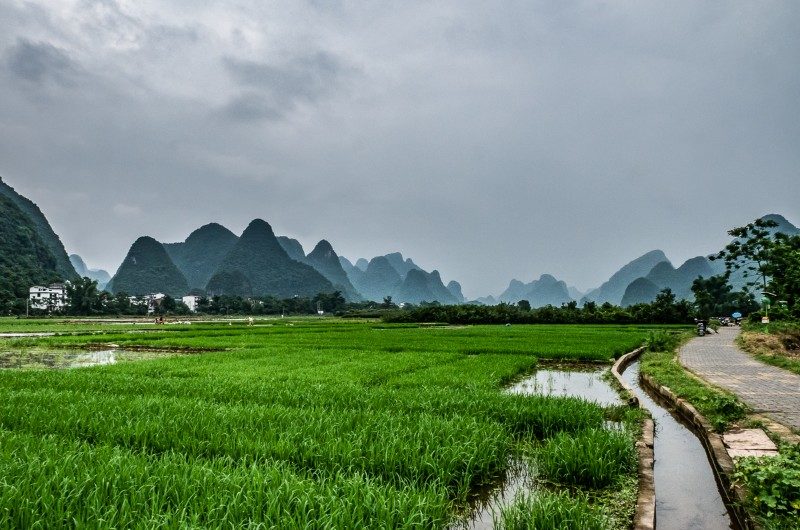
Start at the Yulong River, not West Street. Most tourists do it backwards and miss the heart of what makes Yangshuo special. The Yulong is quieter than the Li River, lined with rice paddies, water buffalo, and those iconic karst peaks you see on the 20 RMB note.
Bamboo rafting is the classic experience—drifting downstream from Shuiedi Wharf to Gongnong Bridge takes about 90 minutes and costs around 120 RMB per raft. The raft drivers are mostly from villages like mine, and if your Chinese is decent, they’ll tell you stories about how this area has changed. If not, the silence and scenery speak for themselves.
If you’re staying at Yangshuo Mountain Retreat, the bamboo raft pickup is literally a 15-minute walk from our property. We’re right on the Yulong River, so you can start your morning with coffee on the riverside terrace, then head straight to rafting. We’ve been helping guests arrange this for over 25 years—it’s seamless.
For cycling, the riverwalk that starts at Mountain Retreat’s parking area runs 9 kilometers north along the Yulong. It’s mostly flat, paved, and passes through villages where you’ll see actual life happening—farmers working fields, kids playing, chickens running around. We provide complimentary bikes, or you can rent an e-bike if you want to cover more ground without the sweat.
Days 3-4: West Street, Markets, and Local Food
West Street is Yangshuo’s beating heart—chaotic, touristy, but undeniably alive. Go in the evening when the lights come on and the street performers set up. Yes, it’s crowded and yes, the prices are inflated, but it’s also where East meets West in the most wierd and interesting ways. You’ll find everything from traditional Guilin rice noodles to excellent pizza and craft beer.
For authentic local food, skip West Street’s main drag and head to Hospital Road (Shen Shan Lu 神山路) where the real Yangshuo street food scene survives. Beer fish (pijiu yu 啤酒鱼) is the local specialty—fresh Li River fish braised in beer with tomatoes and peppers. Every restaurant claims theirs is the best; honestly, they’re all pretty similar. Just pick one that looks busy with locals.
The morning market near Diecuilu Street is where we recommend buying vegetables, though we source from Mountain Retreat’s farms. It’s pure chaos—vendors shouting, scooters weaving through crowds, produce piled everywhere—but it’s real. Come early (7-9 AM) before the tour groups arrive.
Day 5: Li River Cruise or Xingping Photography
If you’re going to do the Li River cruise, this is your day. The classic route goes from Guilin to Yangshuo and takes about 4 hours. The scenery is stunning—those postcard-perfect karst mountains reflected in the water—but it’s also very touristy with large boats and crowds. Book through your hotel to avoid the worst of the scams.
Alternatively, skip the big cruise and head to Xingping. This is where the 20 RMB note photo was taken. The view from Xianggong Hill at sunrise is worth the early wake-up call, and Xingping’s old town has preserved more of its character than Yangshuo. It’s a 40-minute drive or bus ride from Yangshuo.
Days 6-7: Rock Climbing, Hiking, or Deeper Exploration
Yangshuo is world-famous for rock climbing. If you’ve never tried it, local guide companies offer beginner courses on easier routes. If you’re experienced, there are hundreds of bolted routes graded for every level. The Via Ferrata (iron pathway) is perfect for people who want the thrill of climbing without technical skills—it’s basically a secured ladder system up the cliff face with safety cables. The views from the top are incredible.
Moon Hill is the classic hike—a 20-minute uphill walk (more like a stair climb) to reach a natural arch in the karst peak. The views from the top stretch across the entire valley. Go early morning or late afternoon to avoid the heat and the crowds. There’s a small entrance fee of 11 RMB. Please check with your hotel, Moon Hill has been closed for all of 2025.
For something more off-the-beaten-path, the Ten Mile Gallery cycling route passes through villages and rice paddies with mountain scenery on both sides. Mountain Retreat provides detailed maps of trails that most tourists never see—we’ve spent years mapping the area with our guides.
Days 8-9: Slow Down and Live Like a Local
By this point, you’ve seen the main sights. Now is when the 240-hour policy really shines—you have time to just exist here. Spend a morning reading by the Yulong River. Take a Tai Chi class. Get a traditional Chinese massage (30-50 RMB per hour at local shops). Explore villages like Jiuxian where they’re restoring old houses into guesthouses.
If you’re at Mountain Retreat, we have a natural waterfall pool that’s heated in winter. Our riverside garden is where guests end up spending more time than they planned—there’s something about sitting under the karst peaks with a glass of wine that makes people cancel their afternoon plans. The pace here is different from China’s big cities. Use these days to feel it.
Day 10: Departure and Logistics
Your last day is mostly about timing your departure correctly. If you’re flying out of Guilin, leave Yangshuo by early afternoon to avoid any last-minute stress. It’s an hour of easy scenic highway to Liangjiang Airport. The airport bus takes 90 minutes, so factor in buffer time.
If you’re taking the high-speed train to Guangzhou, Shenzhen, or Hong Kong, trains leave from Yangshuo Station (in Xingping) regularly throughout the day. Just remember to arrange transport to the station in advance—Mountain Retreat can organize this for you.
Make sure your departure is before 11:59 PM on your 10th day, counting from midnight after your arrival. The authorities are strict about this.
Where to Stay During Your Visa-Free Transit
We’re obviously biased, but I’ll explain why Yangshuo Mountain Retreat works so well for visa-free transit guests.
Location matters. We’re right on the Yulong River in the scenic area, which means you’re waking up to the views instead of commuting to them. The bamboo rafting starts a 15-minute walk from our front door. The riverside path is at our parking area. You’re in the landscape, not just visiting it.
For guests on a tight 10-day schedule, this saves enormous time. People stay in town and spend half their day in transit to activities. At Mountain Retreat, you walk out your door and you’re already there. Also, we’re 10 minutes from the highway entrance/exit.
The practical side: We’re 100% locally run—everyone working here is from villages within a few kilometers. This means we know everything about the area because we grew up here. Need to find a local craftsman? Want to visit a village festival? We can arrange things that hotels staffed by outsiders simply can’t.
We’ve also been helping international guests since 2001, so we understand the needs of Western travelers—soft beds (or firm ones, we have both), real coffee, kid’s menus and activities, import wines, and staff who speak English well enough to handle everything from restaurant recommendations to emergency doctor visits.
Rooms start at $65 per night, and we have configurations for solo travelers, couples, and families. Most rooms have balconies facing the river and mountains. We’re not a luxury resort—there’s no swimming pool, no spa, no gym. What we are is authentic, comfortable, and genuinely connected to this place.
If you book directly through our website, we can arrange everything: airport pickup, activity bookings, restaurant reservations, even custom itineraries. For guests on visa-free transit who can’t afford to waste time figuring things out, this makes a real difference.
Common Questions About Visa-Free Transit to Yangshuo
Can I extend my 240-hour stay?
No. The 240 hours are fixed. If you want to stay longer, you need to leave China and re-enter with a proper visa, or depart as scheduled.
What if my flight is delayed and I overstay accidentally?
Don’t. Seriously. Overstaying results in fines, deportation, and potential bans from future entry. Build buffer time into your departure day. Better to sit in the airport for two hours than overstay by two hours.
Can I travel outside Guangxi Province during my stay?
Yes! This is new with the 240-hour policy. You can travel to any of the 24 permitted provinces. People are doing Beijing-Xi’an-Guilin-Hong Kong routes now. Just ensure all your destinations are on the approved list.
Do I need to register with local police?
Technically yes. Hotels do this automatically when you check in—they’ll ask for your passport and entry stamp. If you’re staying with friends or in an unregistered guesthouse, you’re supposed to register at the local police station within 24 hours. Most guests in proper hotels never think about this because it’s handled.
What about travel insurance?
Get it. China doesn’t require it for visa-free transit, but you’re foolish to travel without it. Medical care in China is affordable by Western standards but still costs money, and you want evacuation coverage if something serious happens.
Can I enter through Guilin and exit through Shanghai?
Absolutely. You can enter and exit through different ports as long as both are on the approved list. Many guests fly into Guilin, spend time in Yangshuo, then take the high-speed train to Guangzhou or Shenzhen before flying out internationally.
What about Hong Kong West Kowloon Station?
Despite being added to the approved port list in November 2025, immigration at Hong Kong West Kowloon Railway Station is NOT reliably processing 240-hour visa-free transit. Even experienced China travelers with Chinese language skills have been turned away and forced to use alternative entry points like Shekou ferry port. If you’re coming from Hong Kong, fly into Guilin or Guangzhou airports instead, or use the Hong Kong-Zhuhai-Macao Bridge crossing. Do not rely on West Kowloon Station.
Practical Tips from 15 Years of Hosting Transit Guests
- Money: Bring a Visa or Mastercard that works internationally. Many places in Yangshuo still prefer cash (RMB), and while ATMs are available, they don’t always work with foreign cards. Alipay and WeChat Pay are everywhere, but setting them up as a foreigner requires you link them to your foreign credit card. If you prepare for this, it’s extremely helpful paying for everything in China. Mountain Retreat and most larger hotels accept credit cards.
- Internet: Download a VPN before arriving in China. Google, Facebook, WhatsApp, and most Western services don’t work without one. We have free WiFi at Mountain Retreat that’s fast enough for video calls, but you’ll want internet access on your phone too. Get a Chinese SIM card at the airport better yet, or use an international roaming plan.
- Language: Learn a few basic Mandarin phrases. Even just “ni hao” (hello), “xiexie” (thank you), and “duo shao qian” (how much) will help enormously. In Yangshuo, many people speak some English, especially in tourism businesses, but outside town, English is rare. Translation apps work but not always well.
- Transportation: Download Didi (China’s Uber) from the Google Play or Apple Store. before you arrive and set it up with a payment method. It’s the easiest way to get around. Taxis exist but can be sketchy about meters. Mountain Retreat can also arrange private drivers for day trips—slightly more expensive but easier if you don’t want to deal with apps.
- Weather: Check what season you’re visiting. April and October are perfect—comfortable temperatures, beautiful scenery. July-August is hot and humid with afternoon thunderstorms. December-February is cold (5-15°C) but peaceful and beautiful in a misty, moody way. Pack layers regardless of season.
- Pacing: You have ten days. Don’t pack them solid. Build in rest time, slow mornings, unplanned afternoons. The beauty of 240 hours is having enough time to breathe. We see rushed tourists and relaxed travelers—the latter always leave happier.
Why This Policy Matters for Yangshuo
For most of the 1990s and 200’s, Yangshuo was mostly backpackers and climbers. Then it became domestic Chinese tour groups. Now, with 240-hour visa-free transit, we’re seeing a different kind of traveler—professionals on extended layovers, retirees combining Asia trips, digital nomads testing China as a work destination.
The old 144-hour policy was too short. People would arrive, see West Street, do a quick Li River cruise, and leave. They never got to the Yulong River at dawn when mist hangs over the water. They didn’t have time to cycle to Jiuxian Village or sit in a tea house watching farmers work the rice paddies.
Ten days lets you see the difference between tourist Yangshuo and real Yangshuo. That’s what excites us about this policy—it gives people enough time to understand why those of us who live here love this place so much.
Final Thoughts: Making the Most of Your 240 Hours
If we could give one piece of advice to someone using visa-free transit to visit Yangshuo, it’s this: don’t try to see everything. Pick a few things you really want to experience and give them proper time. Slow travel in a fast-paced world. Spend a morning bamboo rafting with nothing but the sound of water. Cycle the riverside path stopping wherever looks interesting. Sit on a balcony at Mountain Retreat with a book and coffee. Talk to locals—even if communication is broken, we appreciate the effort.
China can be overwhelming for first-time visitors. Yangshuo is where it becomes manageable, beautiful, and genuinely moving. The 240-hour policy finally gives you enough time to feel that. When guests leave Mountain Retreat after ten days, they’re not exhausted—they’re refreshed. That’s the difference this policy makes, and that’s why I’m excited to keep guiding visitors through this landscape I’ve loved my whole life.
If you have questions about planning your visa-free transit to Yangshuo, feel free to reach out. We’ve been helping international guests navigate this area since 2001, and we’re pretty good at it by now. reservations@yangshuomountainretreat.com
RELATED POSTS:
- When to Visit Yangshuo: Monthly Weather Guide
- Bamboo Rafting on the Yulong River: Everything You Need to Know
- Cycling Routes Around Yangshuo: From Easy to Challenging
- West Street Yangshuo: A Local’s Guide to Food and Nightlife